Look, I get it, university life is stressful but nothing feels more overwhelming than starting your Master’s thesis and realizing… you don’t even know what your research gap is.
You read paper after paper, highlight everything, take notes—and still feel stuck.
Here’s the truth: finding a research gap is not about reading more. It’s about reading smarter. And in 2026, AI tools are transforming how students identify research gaps in hours instead of weeks.
In this guide, you’ll learn exactly how to use AI to find research gaps for your Master’s degree, while maintaining academic integrity and dramatically improving your student productivity.
If you’re serious about mastering AI in academics, lrnai.xyz is becoming the ultimate platform for future-ready students.
Why Finding a Research Gap Is So Difficult
Let’s be honest—this is where most students struggle.
1. Too Much Information
There are thousands of papers on any topic. Identifying what’s missing is harder than understanding what’s already there.
2. Lack of Clarity
Students often confuse:
- Research topics
- Research problems
- Research gaps
They are not the same.
3. Time Pressure
You don’t have months to “figure things out.”
4. Fear of Being Wrong
“What if my research gap isn’t valid?”
That fear slows down progress.
This is exactly where AI becomes your research partner.

What Does “Finding Research Gaps with AI” Mean?
AI helps you:
- Analyze multiple research papers at once
- Identify patterns and trends
- Detect contradictions in findings
- Highlight under-researched areas
Instead of manually reviewing 50 papers, AI can synthesize insights in minutes.
Here is the real talk about using AI for your assignments: it’s not about shortcuts—it’s about strategic thinking.
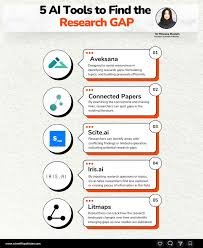
Best AI Tools to Identify Research Gaps in 2026
Let’s look at the tools students are using right now.
AI Research Tool Comparison Table
| Feature | ChatGPT | Elicit | Scite |
|---|---|---|---|
| Gap Identification | High | Very High | High |
| Literature Review Support | Strong | Excellent | Excellent |
| Citation Analysis | Moderate | Strong | Very Strong |
| Ease of Use | Very Easy | Moderate | Easy |
| Best For | Idea generation | Deep research | Evidence validation |
Recommended Tools
- ChatGPT
- Elicit
- Scite
Using a combination of these tools gives you the most accurate results.
AI Tool Checklist for Finding Research Gaps
Before using any AI tool, make sure it can:
- Analyze multiple papers at once
- Summarize key findings
- Compare studies
- Highlight limitations
- Suggest unanswered questions
If your tool doesn’t support at least 3 of these, it won’t help much.
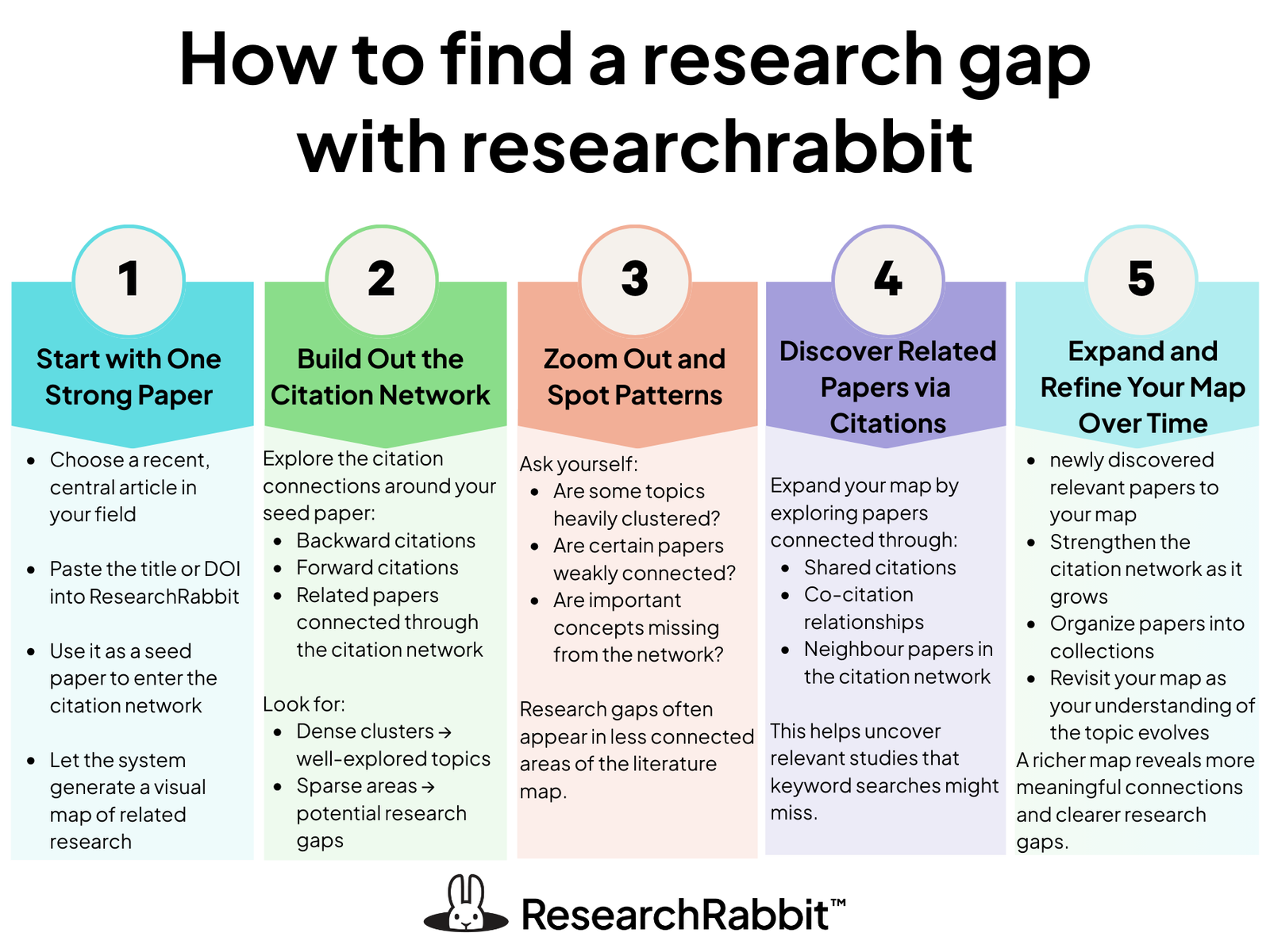
Step-by-Step: How to Use AI to Find Research Gaps for Your Master’s Degree
Let’s break this into a simple, actionable proccess you can follow today.
Step 1: Define Your Broad Topic
Start with a general area:
- Artificial Intelligence in Education
- Climate Change and Agriculture
- Mental Health in Students
Don’t try to be too specific yet.
Step 2: Gather Research Papers
Use AI search tools to collect:
- 10–20 relevant papers
- Recent publications (last 5 years)
- Peer-reviewed sources
This becomes your dataset.
Step 3: Upload Papers into AI Tool
Use tools like ChatGPT or Elicit to:
- Upload PDFs
- Paste abstracts
- Input DOIs
The more data you provide, the better the analysis.
Step 4: Ask Smart Prompts
This is where most students go wrong.
Don’t ask:
“Find research gaps”
Instead ask:
- “What limitations are commonly mentioned in these studies?”
- “What areas require further research based on these papers?”
- “What contradictions exist in these findings?”
Better prompts = better insights.
Step 5: Identify Patterns
AI will highlight:
- Frequently mentioned limitations
- Underexplored populations
- Missing variables
- Conflicting results
These patterns are your research gaps.
Step 6: Validate the Gap
This step is critical for academic integrity.
Check:
- Does the gap appear in multiple papers?
- Is it recent and relevant?
- Is it feasible for your thesis?
Never rely on AI blindly.
Step 7: Convert Gap into Research Question
Turn your gap into:
- A clear research question
- A testable hypothesis
Example:
Gap: Lack of studies on AI tools in rural education
Question: “How effective are AI-based learning tools in rural university settings?”
Now you have a strong thesis direction.
Advanced Techniques for Finding Research Gaps Faster
Once you understand the basics, try these strategies.
1. Comparative Analysis
Ask AI:
“Compare findings from these 10 papers and identify inconsistencies”
Inconsistencies often reveal research gaps.
2. Trend Analysis
Ask:
“What trends are emerging in this research field?”
Gaps often exist where trends are just starting.
3. Limitation Mining
Ask:
“List all limitations mentioned in these studies”
This is one of the fastest ways to find gaps.
4. Cross-Disciplinary Gaps
Ask:
“What happens when this topic is applied to another field?”
This often reveals unique thesis ideas.
Pros and Cons of Using AI for Research Gap Identification
Advantages
- Saves weeks of research time
- Improves literature review quality
- Enhances critical thinking
- Boosts student productivity
- Identifies patterns humans might miss
Limitations
- May suggest vague gaps
- Requires validation
- Depends on input quality
- Risk of over-reliance
So yeah, AI is powerful—but it still needs your judgment.
Ethical Use and Academic Integrity
Let’s be clear.
Using AI to find research gaps is completely acceptable.
But misuse happens when students:
- Copy AI-generated ideas without understanding
- Skip reading original papers
- Present AI insights as their own
Ethical use means:
- Verifying findings
- Understanding the context
- Citing sources properly
If you don’t do this, your research won’t stand up to academic scrutiny.
How AI Transforms Literature Reviews
Finding research gaps is closely tied to literature reviews.
AI helps you:
- Summarize multiple studies
- Identify themes
- Detect patterns
- Highlight missing areas
Instead of spending weeks reading papers, you can focus on analysis.
That’s a massive productivity boost.
Smart Note-Taking for Research Gap Discovery
Modern AI tools also support:
- Automated summaries
- Highlight extraction
- Concept tagging
This makes it easier to track:
- Key findings
- Limitations
- Potential gaps
Everything becomes organized and searchable.
Common Mistakes Students Make
Let me be honest—most students struggle here.
Avoid these mistakes:
- Using vague prompts
- Not validating AI output
- Choosing overly broad gaps
- Ignoring feasibility
- Skipping literature review
If your research gap is weak, your entire thesis will suffer.
The Future of AI in Thesis Research
By 2026, AI is becoming essential for academic success.
Students who know how to:
- Analyze research quickly
- Identify meaningful gaps
- Structure strong arguments
…will always stay ahead.
Platforms like lrnai.xyz are helping students adapt to this new reality with practical, real-world guidance.
And honestly, this is just the beginning.
Final Thoughts: Stop Searching, Start Discovering
Finding a research gap doesn’t have to take weeks.
With AI, you can:
- Analyze research faster
- Identify meaningful gaps
- Build stronger thesis ideas
- Reduce stress
But remember:
AI doesn’t replace thinking—it enhances it.
If you use it wisely, your not just saving time—you’re becoming a smarter researcher.
Call to Action
Ready to find your perfect research gap?
Start using AI tools today and take control of your thesis journey. Then explore more powerful AI strategies on lrnai.xyz to boost your research skills, improve your academic integrity, and stay ahead in the future of learning.
And if you’ve discovered a smart way to identify research gaps, share it—because the best students don’t just follow knowledge, they create it.
Leave a Reply