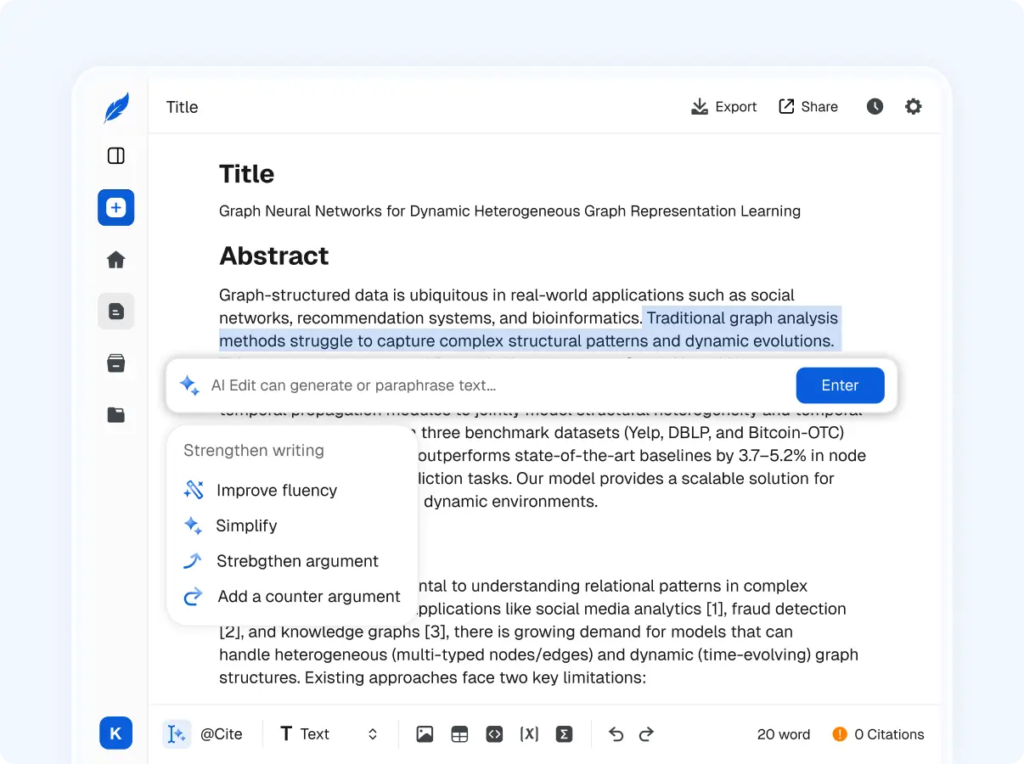
Look, I get it, university life is stressful but one of the most frustrating parts of academic writing isn’t the research—it’s the citations.
Formatting references manually in APA or MLA style can take hours, especially when you’re working on a long literature review or thesis. One small mistake in punctuation or formatting, and your entire reference list can look unprofessional.
Here’s the good news: in 2026, AI tools have made peer-reviewed citation generation faster, smarter, and more accurate than ever.
In this guide, you’ll learn exactly how to use AI for peer-reviewed citation generation (APA/MLA), while maintaining academic integrity and boosting your student productivity.
And if you’re serious about mastering AI in academics, lrnai.xyz is quickly becoming the go-to platform for future-ready students.
Why Citation Generation Is Still a Major Challenge
Before we jump into AI solutions, let’s understand the problem.
1. Complex Formatting Rules
APA and MLA styles require:
- Specific punctuation
- Italics in the right places
- Correct author formatting
- Proper ordering of details
Even experienced students make mistakes.
2. Time-Consuming Process
Manually creating citations for 20+ sources can take hours.
3. Risk to Academic Integrity
Incorrect citations can lead to:
- Plagiarism concerns
- Lower grades
- Credibility issues
This is why AI-powered citation tools are becoming essential.
What Does AI Citation Generation Mean?
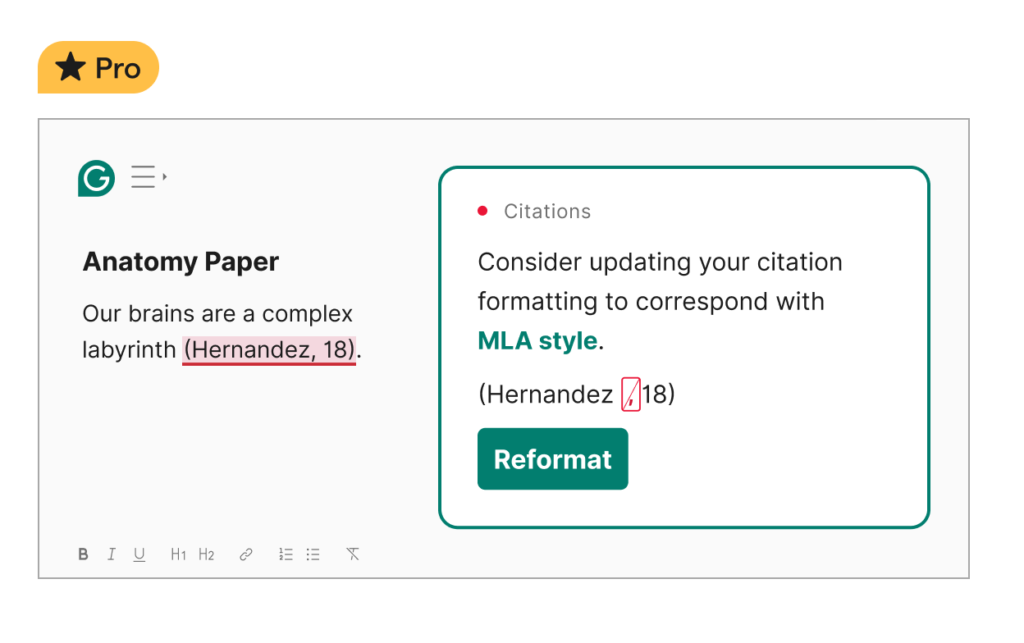
AI citation tools automatically:
- Extract metadata from sources
- Format citations in APA or MLA style
- Generate in-text citations
- Organize reference lists
In 2026, these tools are deeply integrated into research workflows, helping students move faster without sacrificing accuracy.
Here is the real talk about using AI for your assignments: it’s not cheating—it’s efficiency.
Best AI Tools for APA and MLA Citation Generation
Let’s look at the top tools students are using right now.
AI Citation Tool Comparison Table
| Feature | ChatGPT | Zotero | Mendeley |
|---|---|---|---|
| Citation Accuracy | High | Very High | Very High |
| Auto Metadata Extraction | Moderate | Excellent | Excellent |
| Reference Management | Basic | Advanced | Advanced |
| Styles Supported | APA, MLA, more | 9,000+ styles | 7,000+ styles |
| Best For | Quick citations | Full research workflow | Academic libraries |
Featured Tools
- ChatGPT
- Zotero
- Mendeley
Each tool plays a different role, and combining them gives the best results.
AI Tool Checklist for Citation Accuracy
Before using any AI citation tool, make sure it can:
- Generate peer-reviewed citations
- Support APA and MLA formats
- Extract metadata automatically
- Create in-text citations
- Allow manual editing
If your tool can’t do at least 4 of these, it’s not reliable enough.
Step-by-Step: How to Use AI for Peer-Reviewed Citation Generation (APA/MLA)
Let’s break this into a simple, actionable proccess you can follow.
Step 1: Collect Your Sources
Gather all your research materials:
- Journal articles
- Books
- Websites
- PDFs
Make sure they are credible and peer-reviewed.
Step 2: Input Source into AI Tool
You can:
- Paste a DOI
- Upload a PDF
- Enter a URL
- Add title manually
AI tools will automatically extract key details like author, year, and journal.
Step 3: Select Citation Style
Choose your required format:
- APA (7th edition)
- MLA (9th edition)
Most AI tools allow instant switching between styles.
Step 4: Generate Citation
The AI will create:
- Full reference entry
- In-text citation
Example outputs include:
- (Smith, 2024) for APA
- (Smith 24) for MLA
Step 5: Verify Accuracy
This step is critical.
Check:
- Author names
- Publication year
- Title formatting
- Journal name
AI is powerful, but it can still make small errors.
Step 6: Organize References
Use tools like Zotero or Mendeley to:
- Store citations
- Group by topic
- Export bibliographies
This is especially useful for literature review projects.
Advanced Strategies for Students
Once you understand the basics, try these advanced techniques.
1. Bulk Citation Generation
Upload multiple PDFs and generate citations instantly.
Huge time saver.
2. Auto Bibliography Creation
Ask AI:
“Create a complete APA reference list from these sources”
3. Citation Correction Mode
Paste your citations and ask AI:
“Fix formatting errors in APA style”
4. Integration with Writing Tools
Some AI tools integrate with Word and Google Docs to:
- Insert citations automatically
- Update reference lists in real-time
This makes academic writing much smoother.
Pros and Cons of AI Citation Tools
Advantages
- Saves hours of formatting time
- Improves accuracy
- Reduces human error
- Enhances student productivity
- Simplifies literature review writing
Limitations
- Occasional formatting mistakes
- Requires manual verification
- May miss incomplete metadata
- Over-reliance risk
So yeah, AI helps—but you still need to double-check.
Ethical Use and Academic Integrity
Let’s address a key concern.
Using AI for citation generation is completely acceptable—if used correctly.
Ethical use means:
- Citing original sources properly
- Not fabricating references
- Verifying AI outputs
- Understanding your sources
If you generate fake or incorrect citations, your academic integrity is at risk.
And trust me, professors can tell.
How AI Supports Literature Reviews
Citation tools are especially useful for literature reviews.
They help you:
- Manage dozens of sources
- Maintain consistent formatting
- Quickly update references
- Focus on analysis instead of formatting
This is a huge advantage for thesis students.
Smart Note-Taking + Citation Integration
Modern AI tools combine:
- Note-taking
- Citation generation
- Source organization
This creates a seamless research workflow.
Imagine reading a paper, summarizing it, and generating citations—all in one place.
That’s the future of academic productivity.
Common Mistakes Students Make
Let me be honest—students often misuse AI citation tools.
Avoid these:
- Blindly trusting AI output
- Using incorrect citation style
- Ignoring missing data
- Not verifying sources
- Copy-pasting without review
If your citations are wrong, your entire paper loses credibility.
The Future of AI in Academic Writing
By 2026, AI is deeply integrated into academic workflows.
Students who learn how to:
- Generate accurate citations
- Manage references efficiently
- Maintain academic integrity
…will always stay ahead.
Platforms like lrnai.xyz are helping students build these future-ready skills with practical guides and tools.
And honestly, this is just the beginning.
Final Thoughts: Stop Formatting, Start Thinking
Citations are important—but they shouldn’t consume your time.
With AI, you can:
- Generate accurate references in seconds
- Focus on critical thinking
- Improve writing quality
- Reduce stress
But remember:
AI is a tool—not a shortcut to avoid learning.
If you use it wisely, your not just saving time—you’re becoming a smarter student.
Call to Action
Ready to simplify your academic writing?
Start using AI for peer-reviewed citation generation (APA/MLA) today and experience the difference. Then explore more powerful AI strategies on lrnai.xyz to boost your student productivity and master the future of learning.
And if you’ve found a smarter way to manage citations, share it—because the best students don’t just study, they innovate.
Leave a Reply