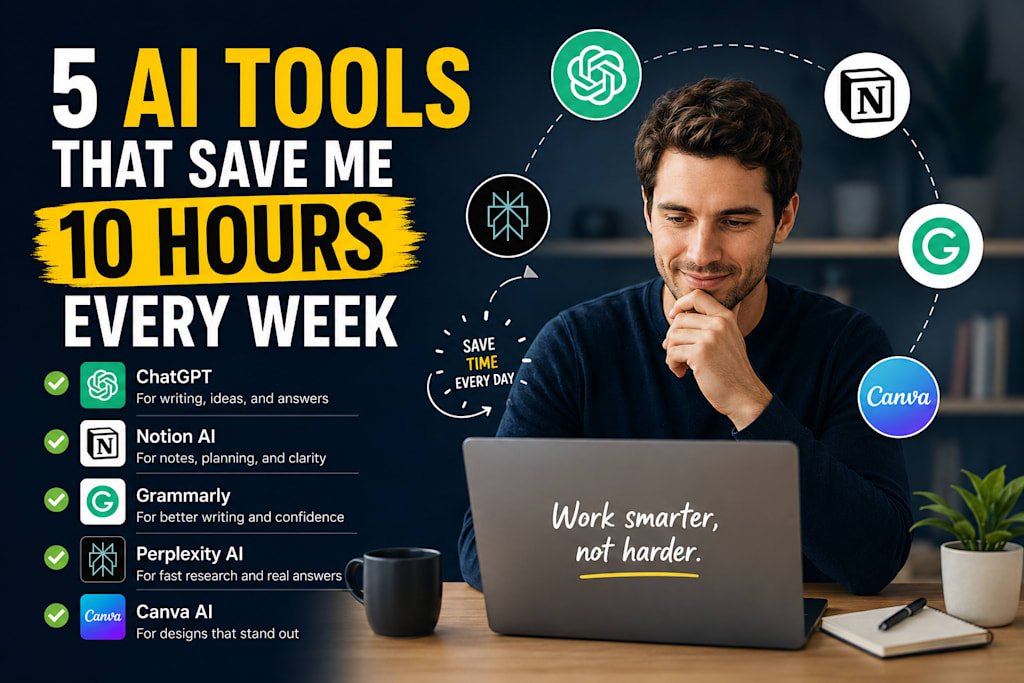
University assignments in digital media are no joke. You’re expected to ideate, script, design, edit, and present—all while juggling deadlines, exams, and your social life. Look, I get it, university life is stressful but here’s the good news: AI is no longer just a shortcut—it’s a powerful creative partner.
In this guide, you’ll learn how to use AI for storytelling in digital media assignments in a way that enhances your creativity, protects academic integrity, and massively boosts student productivity.
We’ll go beyond surface-level tips and show you exactly how to use modern AI tools in 2026 for brainstorming, scripting, visual creation, and even research.
What Does AI Storytelling Mean for Students in 2026?
AI storytelling is the process of using artificial intelligence tools to assist in crafting narratives—whether that’s for videos, animations, podcasts, or interactive media.
Tools like ChatGPT, Midjourney, Runway ML, and Notion AI have evolved significantly by 2026. They don’t just generate content—they help structure ideas, analyze themes, and even simulate audience engagement.
Here is the real talk about using AI for your assignments:
AI won’t replace your creativity—but it will amplify it if used correctly.
Why AI is a Game-Changer for Digital Media Assignments
1. Faster Idea Generation
Struggling with “what should my story be about?” AI can generate dozens of unique concepts in seconds.
2. Structured Storytelling
AI can help you apply narrative frameworks like:
- Three-act structure
- Hero’s journey
- Non-linear storytelling
3. Multimedia Integration
From scripts to visuals to voiceovers, AI tools now handle full storytelling pipelines.
4. Research & Contextual Depth
AI tools assist in literature review, theme analysis, and even cultural context—making your story more academically sound.
AI Tool Comparison for Storytelling Projects
| Tool | Best For | Key Feature | Limitation |
|---|---|---|---|
| ChatGPT | Scriptwriting, ideation | Context-aware storytelling | Needs fact-checking |
| Midjourney | Visual storytelling | High-quality AI art | Limited control over exact details |
| Runway ML | Video production | AI-powered editing & effects | Learning curve |
| Notion AI | Planning & notes | Smart organization | Less creative depth |
| Descript | Audio storytelling | AI voice & editing | Premium features costly |
Step-by-Step: How to Use AI for Storytelling in Digital Media Assignments
Step 1: Define Your Assignment Goals
Before touching AI, clarify:
- What format? (video, animation, podcast)
- What theme? (social issue, fiction, documentary)
- What academic requirements?
You can even prompt ChatGPT like:
“Help me break down my digital media assignment into key storytelling components.”
Step 2: Generate Story Ideas
Use AI to brainstorm:
Example prompt:
“Give me 5 unique digital storytelling ideas about climate change for university students.”
Refine ideas by asking:
- “Make it more emotional”
- “Add a plot twist”
- “Simplify for a 3-minute video”
This is where AI shines—you can iterate instantly.
Step 3: Build a Narrative Structure
Ask AI to structure your story:
“Turn this idea into a three-act story with characters and conflict.”
You’ll get:
- Beginning (setup)
- Middle (conflict)
- End (resolution)
But don’t blindly copy. Adjust it to match your voice—this is critical for academic integrity.
Step 4: Scriptwriting with AI Assistance
Now generate a script draft:
“Write a 2-minute video script with dialogue and narration.”
Then refine:
- Add emotional depth
- Improve pacing
- Align with assignment rubric
Pro tip: Combine AI with your own editing to avoid generic outputs. Otherwise, your proccess may feel robotic.
Step 5: Visual Storytelling with AI Tools
Use Midjourney to create:
- Scene concepts
- Character designs
- Background visuals
Prompt example:
“Create a cinematic scene of a lonely student in a futuristic city, emotional tone.”
For video projects, use Runway ML to:
- Generate clips
- Remove backgrounds
- Add effects
Step 6: Voice & Audio Enhancement
AI tools like Descript allow you to:
- Generate voiceovers
- Edit audio seamlessly
- Remove filler words
This is perfect for podcast-style storytelling assignments.
Step 7: Organize Your Workflow
Use Notion AI for:
- Story outlines
- Research notes
- Timeline planning
This boosts student productivity and keeps your work structured.
Step 8: Add Academic Depth
This is where most students fail.
Use AI for:
- Literature review summaries
- Thematic analysis
- Cultural or historical context
But always:
- Verify sources
- Cite properly
- Avoid plagiarism
AI should assist—not replace—your academic thinking.
AI Storytelling Checklist for Students
Before submitting your assignment, ask yourself:
- Did I use AI to assist—not replace—my creativity?
- Did I edit and personalize the AI output?
- Are my sources properly cited?
- Does my story meet academic requirements?
- Is my narrative clear and engaging?
If you can say yes to all, your on the right track.
Pros and Cons of Using AI in Storytelling Assignments
Pros
- Saves time (10+ hours weekly)
- Enhances creativity
- Improves structure and clarity
- Supports research and analysis
Cons
- Risk of over-reliance
- Generic outputs if not edited
- Academic integrity concerns
- Requires learning curve
Ethical Use of AI in Academic Work
Let’s be clear: universities are increasingly strict about AI usage.
To stay safe:
- Disclose AI usage if required
- Use AI for drafting—not final submission
- Always revise content in your own voice
Think of AI as a collaborator, not a ghostwriter.
Advanced Tips for 2026 Students
1. Combine Multiple AI Tools
Don’t rely on just one platform. Combine writing, visuals, and editing tools for best results.
2. Use AI for Feedback
Ask AI:
“Critique this story and suggest improvements.”
3. Simulate Audience Reactions
AI can predict how different audiences might respond to your story.
How AI Supports Thesis & Research-Based Storytelling
For advanced students, AI is incredibly useful in:
- Structuring literature review sections
- Identifying research gaps
- Translating academic findings into compelling narratives
This is especially useful in documentary-style assignments.
Final Thoughts: The Smart Way to Use AI
AI is not a shortcut—it’s a skill.
Students who learn how to use AI for storytelling in digital media assignments effectively will stand out—not just academically, but professionally.
And if you’re serious about mastering AI for your studies, lrnai.xyz is your go-to platform. It’s designed specifically for students who want to stay ahead in the future of learning.
Call to Action
Start experimenting with AI in your next assignment today. Try one tool, build one story, and improve with each project.
Then head over to lrnai.xyz to explore more expert guides, tools, and strategies designed to boost your academic success.
And hey—share your AI storytelling hacks with your classmates. Because the future of education isn’t just about working harder… it’s about working smarter.
Leave a Reply