Look, I get it—university life is stressful but creative writing adds a whole new layer of pressure. You’re not just trying to finish assignments… you’re trying to create something meaningful, original, and engaging.
And sometimes? The hardest part isn’t writing—it’s knowing what to write.
That’s where the best AI for creative writing students: plot and character help tools come in. In 2026, AI has evolved far beyond grammar correction. It now helps students brainstorm plots, develop realistic characters, and overcome writer’s block without compromising academic integrity.
In this guide, I’ll walk you through the top AI tools, how to use them effectively, and how to balance creativity with ethical academic usage.
Why Creative Writing Students Are Using AI in 2026
AI is no longer just for essays or research. Creative writing students are using tools powered by organizations like OpenAI to:
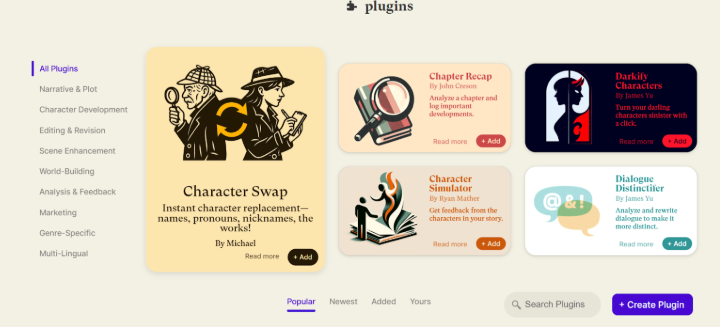
- Generate plot ideas
- Develop character backstories
- Build dialogue and narrative flow
- Experiment with different writing styles
But here is the real talk about using AI for your assignments: AI should support your creativity, not replace it.
Think of it as a brainstorming partner—not a ghostwriter.
Best AI Tools for Plot and Character Development
Let’s explore the best AI for creative writing students: plot and character help available right now.
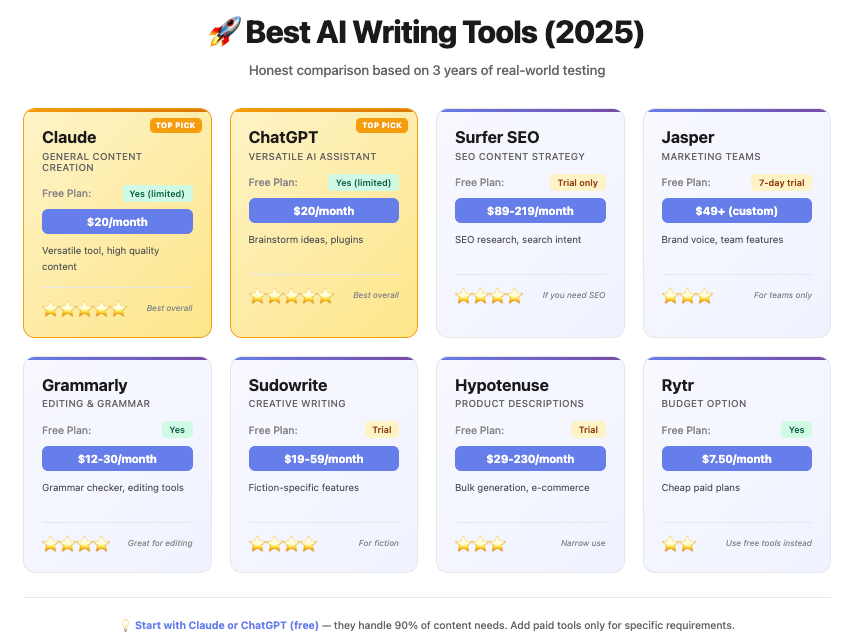
1. ChatGPT
One of the most versatile tools for creative writers.
Key Features
- Generates plot outlines
- Builds detailed character profiles
- Helps with dialogue and scene writing
Pros
- Highly customizable prompts
- Great for brainstorming
- Free version available
Cons
- Requires good prompting skills
- Can produce generic ideas if not guided
2. Sudowrite
Designed specifically for fiction writers.
Key Features
- “Describe” tool for vivid scenes
- Character and plot expansion
- Creative rewriting suggestions
Pros
- Excellent for storytelling
- Enhances descriptive writing
- Writer-friendly interface
Cons
- Limited free access
- Can feel overwhelming for beginners
3. NovelAI
A tool focused on immersive storytelling and world-building.
Key Features
- Long-form story generation
- Character consistency tracking
- Custom storytelling styles
Pros
- Great for fantasy and sci-fi
- Strong narrative continuity
Cons
- Subscription required for full features
- Learning curve for new users
4. Grammarly
Not a storytelling AI, but essential for polishing creative work.
Key Features
- Grammar and clarity improvements
- Tone suggestions
- Readability enhancement
Pros
- Easy to use
- Improves final drafts
Cons
- Doesn’t help with plot creation
5. QuillBot
Useful for refining and reworking narrative sentences.
Key Features
- Sentence rewriting
- Vocabulary enhancement
- Summarization
Pros
- Helps improve flow
- Great for editing
Cons
- Not designed for storytelling from scratch
Comparison Table: Best AI Tools for Creative Writing Students
| Tool | Best For | Plot Help | Character Development | Ease of Use | Free Version |
|---|---|---|---|---|---|
| ChatGPT | All-purpose writing | Excellent | Excellent | Easy | Yes |
| Sudowrite | Fiction writing | Strong | Strong | Medium | Limited |
| NovelAI | World-building | Excellent | Good | Medium | Limited |
| Grammarly | Editing | None | None | Very Easy | Yes |
| QuillBot | Rewriting | Limited | None | Easy | Yes |
Step-by-Step: How to Use AI for Plot and Character Development
Let’s break this down into a system you can actually follow.
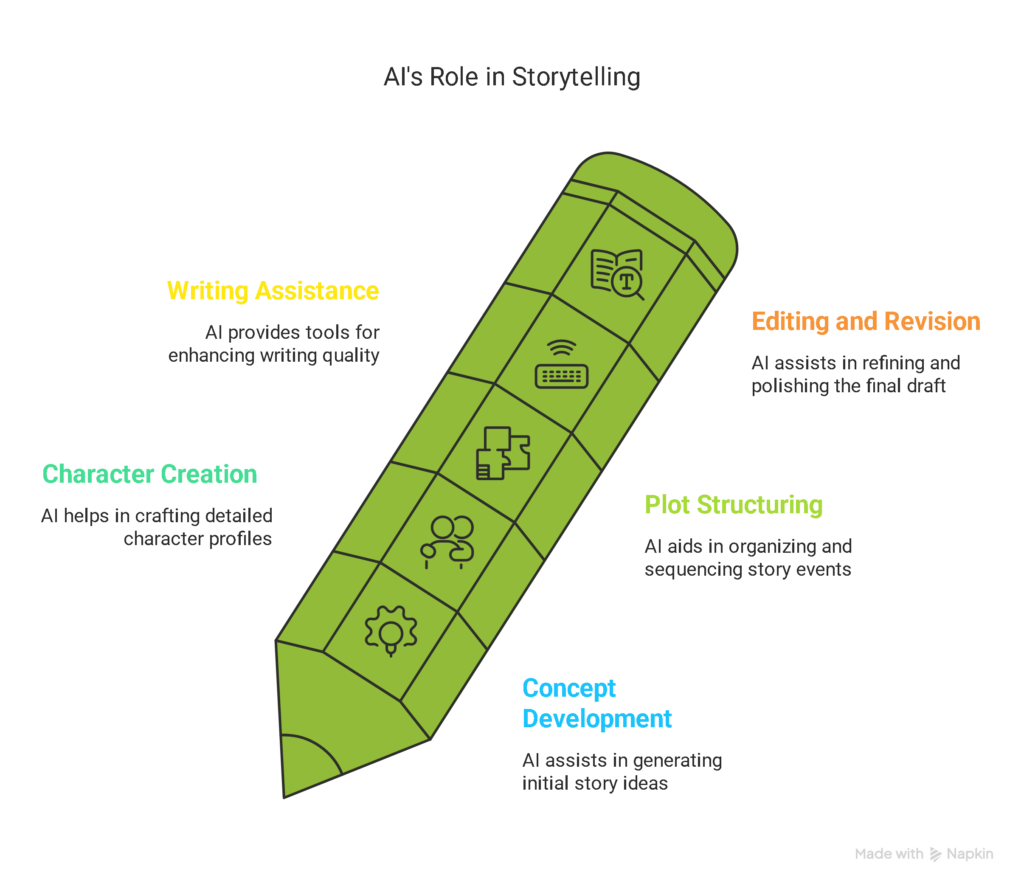
Step 1: Start With a Core Idea
Before using AI, define:
- Genre (fantasy, romance, thriller)
- Theme (love, conflict, identity)
- Basic concept
Example:
“A story about a student who discovers a hidden AI system that predicts the future.”
Step 2: Use AI to Expand the Plot
Open ChatGPT and prompt:
- “Create a 3-act plot structure for this story…”
- “Add conflict and plot twists…”
This gives you a structured foundation.
Step 3: Build Deep Characters
Ask AI:
- “Create a detailed character profile for the protagonist”
- “What are their fears, motivations, and flaws?”
Strong characters = strong stories.
Step 4: Generate Scenes and Dialogue
Use AI to:
- Draft key scenes
- Explore dialogue options
- Experiment with tone
But don’t just copy—adapt it to your voice.
Step 5: Edit and Refine
Use tools like Grammarly and QuillBot to:
- Improve clarity
- Fix grammar
- Enhance flow
Step 6: Add Your Unique Voice
This is the most important step.
AI can help generate ideas—but your creativity is what makes the story original.
AI Tool Checklist for Creative Writing Students
Before submitting your work, ask yourself:
- Did I create the core idea myself?
- Did I use AI only for brainstorming and support?
- Does the story reflect my voice and style?
- Have I edited AI-generated content?
- Am I following academic integrity guidelines?
If yes, your on the right track.
How AI Improves Student Productivity in Creative Writing
Using the best AI for creative writing students: plot and character help can:
- Reduce writer’s block
- Speed up brainstorming
- Improve story structure
- Enhance writing quality
In 2026, students are combining:
- AI for storytelling
- AI for literature review research (for academic writing)
- AI for smart note-taking
This creates a balanced workflow that boosts both creativity and academic performance.
At lrnai.xyz, we focus on helping students build these workflows responsibly.
Common Mistakes to Avoid
Let me be honest—these mistakes can hold you back:
- Letting AI write your entire story
- Not editing AI-generated content
- Ignoring character depth
- Overusing clichés from AI outputs
- Skipping revision (this is where many students mess up the proccess)
Also, some AI suggestions might sound good—but lack originality. Always refine them.
Ethical Use of AI in Creative Writing
Using tools like ChatGPT is acceptable in most educational settings if used properly.
You should:
- Use AI for brainstorming
- Keep your work original
- Follow assignment guidelines
You should NOT:
- Submit fully AI-generated stories
- Ignore academic integrity rules
- Depend entirely on AI
Remember, creativity cannot be automated—only supported.
Final Thoughts: Is AI Worth It for Creative Writing Students?
Absolutely—but only if used wisely.
AI can:
- Inspire new ideas
- Improve structure
- Save time
But your imagination, your voice, and your effort are what truly matter.
If you rely too much on AI, your writing may feel generic. But if you use it strategically, it can elevate your work to a professional level.
Call to Action
Now it’s your turn.
Try one of the tools mentioned above and see how it transforms your writing proccess. Experiment with plot ideas, build deeper characters, and push your creativity further.
Then explore more expert guides on lrnai.xyz—your ultimate resource to master AI for learning, writing, and student productivity in 2026.
And hey, don’t keep your ideas to yourself. Share your writing hacks, your AI prompts, and your creative breakthroughs. Because your story deserves to be told.
Leave a Reply