Author: mumariqbal191@gmail.com

  • How to Summarize 50-Page Research Papers Using AI in Seconds (Save 10+ Hours Every Week)

    How to Summarize 50-Page Research Papers Using AI in Seconds (Save 10+ Hours Every Week)

    Look, I get it, university life is stressful but the real challenge isn’t just studying—it’s managing time. Between lectures, assignments, and deadlines, reading a 50-page research paper can feel overwhelming.

    Now here’s the good news: in 2026, AI tools have completely changed how students handle academic reading. You no longer need to spend hours skimming dense material. You can summarize entire research papers in seconds—without losing key insights.

    This guide will walk you through exactly how to summarize 50-page research papers using AI in seconds, while still maintaining academic integrity and improving your learning process.

    If you’re serious about mastering AI for education, platforms like lrnai.xyz are becoming essential for modern students.
    Why Summarizing Research Papers Matters More Than Ever

    Before we jump into tools and steps, let’s talk reality.

    Research papers are not written to be easy—they are written to be accurate. That means:

    • Complex language
    • Dense methodologies
    • Long literature reviews
    • Technical jargon

    For students, this creates three major problems:

    1. Time Drain

    Reading one paper can take 2–4 hours. Multiply that by 10 papers for a literature review and your whole week is gone.

    2. Cognitive Overload

    You might read everything and still not understand the core argument.

    3. Inefficient Note-Taking

    Manual summaries often miss key findings or include unnecessary details.

    This is where AI becomes your academic advantage.
    What Does “Summarizing with AI” Actually Mean?

    AI-powered summarization uses advanced natural language processing to:

    • Extract key arguments
    • Identify research objectives
    • Highlight methodology
    • Present conclusions clearly

    In 2026, these tools are not just summarizers—they are academic assistants.

    They can:

    • Convert PDFs into structured summaries
    • Generate bullet points for quick revision
    • Simplify complex sections
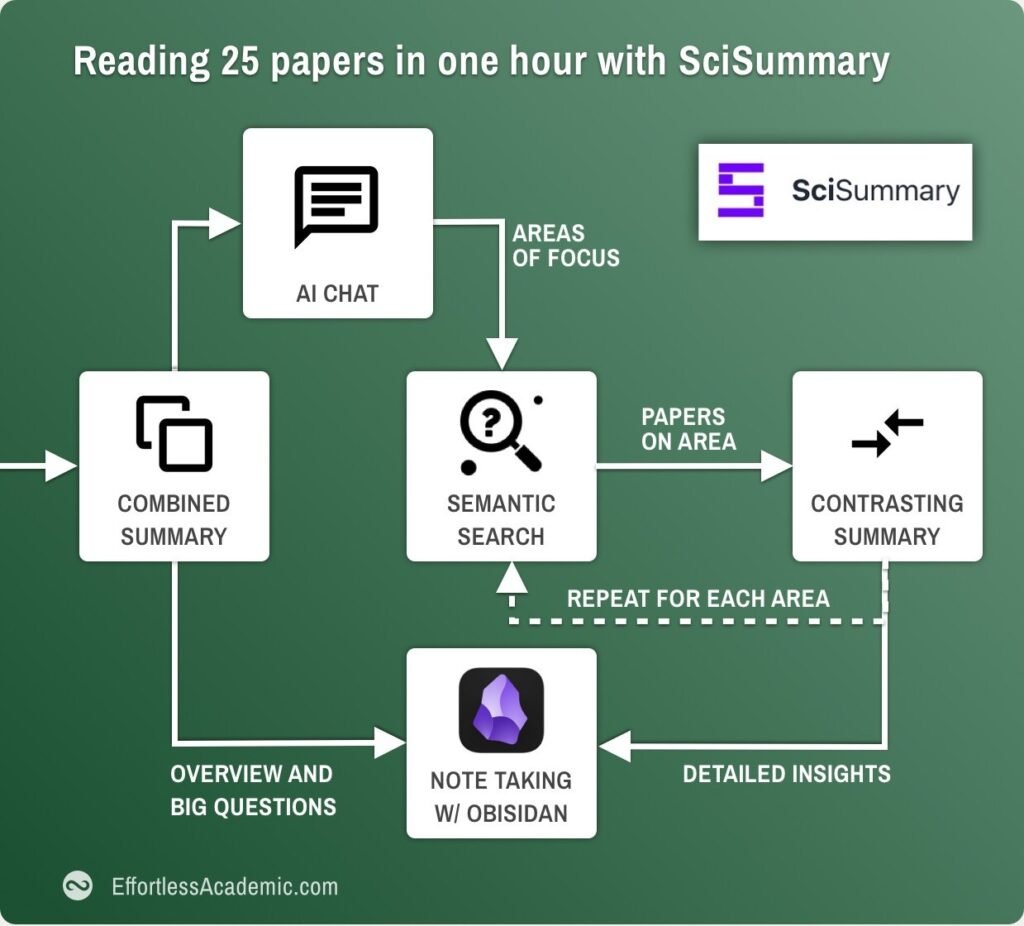
    • Help with literature review synthesis

    Here is the real talk about using AI for your assignments: it’s not about cheating—it’s about working smarter.

    Best AI Tools to Summarize Research Papers in 2026

    Here’s a quick comparison of top tools students are using right now:

    AI Tool Comparison Table

    FeatureChatGPTPerplexity AIScholar AI Tools
    PDF UploadYesYesYes
    Academic FocusHighMediumVery High
    Citation SupportModerateStrongStrong
    SpeedVery FastFastModerate
    Best ForDeep summariesQuick answersResearch-heavy tasks

    Each tool has its strengths, but the best results often come from combining them.

    AI Tool Checklist for Students

    Before choosing a tool, make sure it can:

    • Handle large PDFs (50+ pages)
    • Provide structured summaries (Abstract, Methods, Results)
    • Maintain academic integrity
    • Support note-taking or export options
    • Work fast (seconds, not minutes)

    If a tool doesn’t meet at least 3 of these, it’s probably not worth your time.

    Step-by-Step: How to Summarize a 50-Page Research Paper Using AI

    Now let’s break it down into a simple, practical proccess you can follow today.

    Step 1: Upload the Research Paper

    • Open your AI tool
    • Upload the PDF (most tools allow drag-and-drop)
    • Ensure the file is clear and readable

    Tip: If the PDF is scanned, use OCR tools first for better results.

    Step 2: Use a Smart Prompt

    This is where most students mess up.

    Instead of saying:
    “Summarize this paper”

    Use:
    “Summarize this 50-page research paper into key sections: Abstract, Methodology, Results, and Conclusion. Keep it concise but academically accurate.”

    Better prompts = better results.

    Step 3: Generate a Structured Summary

    The AI will usually return:

    • Key research question
    • Main arguments
    • Methods used
    • Findings
    • Limitations

    Read through it once to ensure accuracy.

    Step 4: Ask Follow-Up Questions

    This is where AI becomes powerful.

    Ask things like:

    • “Explain the methodology in simple terms”
    • “What are the key limitations?”
    • “How does this relate to my topic?”

    This step transforms passive reading into active learning.

    Step 5: Convert into Notes

    Now turn the summary into:

    • Bullet points
    • Flashcards
    • Mind maps

    This improves retention and helps during exams.

    Step 6: Cross-Check for Academic Integrity

    AI is powerful—but not perfect.

    Always:

    • Verify key facts
    • Check citations
    • Read original sections if needed

    Remember: AI assists you, it doesn’t replace critical thinking.

    Advanced Techniques for Faster Summaries

    Once you master the basics, try these strategies.

    1. Chunking Method

    Upload the paper in sections (e.g., 10 pages at a time) for more accurate summaries.

    2. Comparative Summarization

    Upload multiple papers and ask:
    “Compare the findings of these studies”

    Perfect for literature review work.

    3. Simplification Mode

    Ask AI to:
    “Explain this paper like I’m a first-year student”

    Great for difficult topics.

    4. Highlight-Based Summarization

    Some tools allow you to highlight text and generate summaries instantly.

    This is a huge productivity boost.

    Pros and Cons of Using AI for Research Summaries

    Advantages

    • Saves hours of reading time
    • Improves student productivity
    • Simplifies complex topics
    • Helps with literature review writing
    • Enhances note-taking

    Limitations

    • May miss nuanced arguments
    • Risk of over-reliance
    • Requires fact-checking
    • Not always perfect with technical papers

    So yeah, AI is powerful—but you still need your brain.

    Ethical Use: Protecting Academic Integrity

    Let’s address the elephant in the room.

    Is using AI for summarizing cheating?

    No—if used correctly.

    Ethical use means:

    • Using AI as a support tool
    • Not submitting AI-generated content as your own
    • Citing sources properly
    • Understanding the material

    Universities in 2026 are not banning AI—they are teaching students how to use it responsibly.

    If you rely on AI without understanding the content, your not learning—you’re just copying.

    How AI Helps in Literature Reviews

    Summarizing papers is just the beginning.

    AI can also:

    • Identify research gaps
    • Compare multiple studies
    • Generate thematic summaries
    • Organize references

    For thesis students, this is a game changer.

    Instead of spending weeks reading papers, you can analyze them in days.

    Smart Note-Taking with AI

    Modern AI tools integrate with note systems to:

    • Auto-generate summaries
    • Tag key concepts
    • Create revision notes

    This transforms how students study.

    Imagine finishing 10 papers and having clean, structured notes ready instantly.

    That’s not the future—it’s already here.

    Common Mistakes Students Make

    Let me be honest—most students don’t use AI properly.

    Avoid these:

    • Using vague prompts
    • Blindly trusting summaries
    • Skipping original content entirely
    • Ignoring academic integrity

    AI is a tool. If you misuse it, the results will show.

    The Future of AI in Student Learning

    By 2026, AI is no longer optional—it’s essential.

    Students who learn how to:

    • Summarize efficiently
    • Take smart notes
    • Conduct faster research

    …will always stay ahead.

    Websites like lrnai.xyz are helping students adapt to this shift by providing practical, real-world AI strategies.

    And honestly, this is just the beginning.

    Final Thoughts: Work Smarter, Not Harder

    Summarizing 50-page research papers used to take hours. Now it takes seconds.

    But here’s the key takeaway:

    AI doesn’t replace effort—it amplifies it.

    If you combine AI tools with critical thinking, you’ll:

    • Save time
    • Improve grades
    • Reduce stress
    • Actually understand your subjects

    So next time you face a long research paper, don’t panic—use AI strategically.

    Your future self will thank you.

    Call to Action

    Ready to upgrade your study game?

    Start experimenting with AI summarization tools today and see how much time you can save. Then head over to lrnai.xyz to discover more powerful AI strategies, share your own study hacks, and stay ahead in the future of learning.

    Because smart students don’t just study harder—they study smarter.
  • How to Find Credible Academic Sources Using AI Search Engines (Save 10+ Hours Every Week)

    How to Find Credible Academic Sources Using AI Search Engines (Save 10+ Hours Every Week)

    Look, I get it, university life is stressful but finding credible academic sources is often harder than writing the assignment itself. You open Google, type your topic, and suddenly you’re drowning in blogs, outdated studies, and questionable websites.

    Here’s the reality: in 2026, students who know how to find credible academic sources using AI search engines are miles ahead of everyone else.

    AI isn’t just helping you search—it’s helping you think like a researcher.

    In this guide, you’ll learn exactly how to use modern AI tools to find trustworthy, high-quality academic sources in minutes, not hours. And if you’re serious about mastering AI for education, platforms like lrnai.xyz are becoming essential learning hubs.

    Why Finding Credible Sources Is a Big Deal in 2026

    Before diving into tools, let’s talk about why this matters more than ever.

    1. Information Overload

    There are millions of articles online, but only a fraction are academically reliable.

    2. Fake or Low-Quality Content

    Not everything that looks “academic” actually is. Some sources lack peer review or proper citations.

    3. Time Pressure

    Students don’t have hours to manually filter sources anymore.

    4. Academic Integrity Risks

    Using unreliable sources can weaken your argument—or worse, harm your credibility.

    This is why AI-powered search engines are changing the game .

    What Are AI Search Engines for Academic Research?

    AI search engines go beyond keyword matching. They:

    • Understand context and intent
    • Prioritize peer-reviewed research
    • Provide summarized insights
    • Show citations and references

    In short, they act like a research assistant who never gets tired.

    Here is the real talk about using AI for your assignments: it’s not about replacing effort—it’s about making smarter decisions faster.

    Best AI Search Engines for Finding Academic Sources

    Let’s compare some of the top tools students are using in 2026.

    AI Search Engine Comparison Table

    FeaturePerplexity AIElicitSemantic Scholar
    Citation SupportStrongVery StrongExcellent
    Academic FocusMedium-HighHighVery High
    Literature Review HelpGoodExcellentExcellent
    Ease of UseVery EasyModerateEasy
    Best ForQuick researchDeep analysisVerified sources

    Each tool serves a slightly different purpose, so your choice depends on your academic needs.

    AI Tool Checklist for Credible Sources

    Before trusting any AI search engine, make sure it:

    • Shows citations with links
    • Prioritizes peer-reviewed journals
    • Displays publication dates
    • Provides author information
    • Allows source verification

    If your tool doesn’t do these, it’s not reliable enough for academic work.

    Step-by-Step: How to Find Credible Academic Sources Using AI Search Engines

    Now let’s break this down into a simple, actionable proccess you can follow.

    Step 1: Start with a Clear Research Question

    Instead of searching:
    “climate change”

    Try:
    “What are the latest peer-reviewed studies on climate change impact on agriculture?”

    Specific queries = better results.

    Step 2: Use an AI Search Engine

    Start with tools like:

    • Perplexity AI
    • Elicit
    • Semantic Scholar

    These tools are designed for academic discovery, not general browsing.

    Step 3: Analyze the Results Carefully

    Look for:

    • Journal names
    • Author credentials
    • Citation counts
    • Publication year

    AI will often summarize results—but don’t stop there.

    Step 4: Open and Verify Sources

    Always click into the original paper.

    Check:

    • Is it peer-reviewed?
    • Is the journal reputable?
    • Are references included?

    This step protects your academic integrity.

    Step 5: Ask AI to Refine Results

    Use follow-up prompts like:

    • “Show only peer-reviewed sources”
    • “Find studies published after 2022”
    • “Compare top 5 research papers on this topic”

    This helps narrow down to the most relevant material.

    Step 6: Export and Organize Sources

    Use AI or reference managers to:

    • Save PDFs
    • Generate citations
    • Organize your literature review

    This is where student productivity really improves.

    Advanced Strategies for Smarter Research

    Once you understand the basics, you can level up your research skills.

    1. Multi-Tool Approach

    Don’t rely on one AI tool. Combine results from multiple platforms for better accuracy.

    2. Citation Chaining

    Find one strong paper, then explore its references.

    AI tools make this incredibly fast.

    3. Thematic Search

    Ask AI:
    “What are the main themes in this research area?”

    Perfect for literature review writing.

    4. Gap Identification

    Use prompts like:
    “What gaps exist in current research on this topic?”

    This is gold for thesis students.

    Pros and Cons of Using AI Search Engines

    Advantages

    • Saves hours of research time
    • Improves accuracy of sources
    • Enhances literature review quality
    • Boosts student productivity
    • Simplifies complex topics

    Limitations

    • May overlook niche papers
    • Requires manual verification
    • Some tools have paywalls
    • Risk of over-reliance

    So yeah, AI is powerful—but it’s not perfect.

    Ethical Use and Academic Integrity

    Let’s be clear: using AI to find sources is completely acceptable.

    But misuse happens when students:

    • Copy summaries without reading
    • Skip proper citation
    • Trust AI blindly

    Ethical use means:

    • Verifying all sources
    • Understanding the content
    • Citing correctly

    If you don’t do this, your research quality will suffer—even if your using advanced tools.

    How AI Improves Literature Reviews

    AI search engines are especially useful for literature reviews.

    They can:

    • Summarize multiple studies
    • Identify trends
    • Compare findings
    • Highlight contradictions

    Instead of reading 20 papers manually, you can analyze them strategically.

    That’s a massive time saver.

    Smart Note-Taking with AI Search Tools

    Modern AI tools now integrate with note-taking systems to:

    • Auto-generate summaries
    • Highlight key arguments
    • Tag important concepts

    This creates a streamlined research workflow.

    Imagine finding sources, summarizing them, and organizing notes—all in one place.

    That’s the future of student productivity.

    Common Mistakes Students Make

    Let me be honest—most students misuse AI search engines.

    Avoid these mistakes:

    • Using vague queries
    • Ignoring source credibility
    • Not checking publication dates
    • Over-relying on summaries
    • Skipping original papers

    AI helps you find information, but it doesn’t replace critical thinking.

    The Future of AI in Academic Research

    By 2026, AI search engines are becoming standard tools in education.

    Students who learn how to:

    • Find credible sources quickly
    • Evaluate research quality
    • Organize information effectively

    …will always have an edge.

    Platforms like lrnai.xyz are helping students adapt to this shift with practical guides and real-world strategies.

    And honestly, we’re just getting started.

    Final Thoughts: Research Smarter, Not Harder

    Finding credible academic sources used to be slow and frustrating.

    Now, with AI search engines, it’s fast, efficient, and even enjoyable.

    But remember:

    AI doesn’t make you a better student—how you use it does.

    If you combine AI tools with critical thinking and ethical practices, you’ll:

    • Improve your research quality
    • Save time
    • Strengthen your arguments
    • Stay ahead academically

    So the next time you start an assignment, don’t just search—search smart.

    Call to Action

    Ready to transform your research process?

    Start using AI search engines today and see the difference in your speed and accuracy. Then explore more powerful AI learning strategies on lrnai.xyz—your ultimate destination for mastering the future of education.

    And if you’ve discovered a unique research workflow, share it. Because the smartest students don’t just learn—they innovate.

  • How to Use AI for Peer-Reviewed Citation Generation (APA/MLA) and Save 10+ Hours Every Week

    How to Use AI for Peer-Reviewed Citation Generation (APA/MLA) and Save 10+ Hours Every Week

    Look, I get it, university life is stressful but one of the most frustrating parts of academic writing isn’t the research—it’s the citations.

    Formatting references manually in APA or MLA style can take hours, especially when you’re working on a long literature review or thesis. One small mistake in punctuation or formatting, and your entire reference list can look unprofessional.

    Here’s the good news: in 2026, AI tools have made peer-reviewed citation generation faster, smarter, and more accurate than ever.

    In this guide, you’ll learn exactly how to use AI for peer-reviewed citation generation (APA/MLA), while maintaining academic integrity and boosting your student productivity.

    And if you’re serious about mastering AI in academics, lrnai.xyz is quickly becoming the go-to platform for future-ready students.

    Why Citation Generation Is Still a Major Challenge

    Before we jump into AI solutions, let’s understand the problem.

    1. Complex Formatting Rules

    APA and MLA styles require:

    • Specific punctuation
    • Italics in the right places
    • Correct author formatting
    • Proper ordering of details

    Even experienced students make mistakes.

    2. Time-Consuming Process

    Manually creating citations for 20+ sources can take hours.

    3. Risk to Academic Integrity

    Incorrect citations can lead to:

    • Plagiarism concerns
    • Lower grades
    • Credibility issues

    This is why AI-powered citation tools are becoming essential.

    What Does AI Citation Generation Mean?

    AI citation tools automatically:

    • Extract metadata from sources
    • Format citations in APA or MLA style
    • Generate in-text citations
    • Organize reference lists

    In 2026, these tools are deeply integrated into research workflows, helping students move faster without sacrificing accuracy.

    Here is the real talk about using AI for your assignments: it’s not cheating—it’s efficiency.

    Best AI Tools for APA and MLA Citation Generation

    Let’s look at the top tools students are using right now.

    AI Citation Tool Comparison Table

    FeatureChatGPTZoteroMendeley
    Citation AccuracyHighVery HighVery High
    Auto Metadata ExtractionModerateExcellentExcellent
    Reference ManagementBasicAdvancedAdvanced
    Styles SupportedAPA, MLA, more9,000+ styles7,000+ styles
    Best ForQuick citationsFull research workflowAcademic libraries

    Featured Tools

    • ChatGPT
    • Zotero
    • Mendeley

    Each tool plays a different role, and combining them gives the best results.

    AI Tool Checklist for Citation Accuracy

    Before using any AI citation tool, make sure it can:

    • Generate peer-reviewed citations
    • Support APA and MLA formats
    • Extract metadata automatically
    • Create in-text citations
    • Allow manual editing

    If your tool can’t do at least 4 of these, it’s not reliable enough.

    Step-by-Step: How to Use AI for Peer-Reviewed Citation Generation (APA/MLA)

    Let’s break this into a simple, actionable proccess you can follow.

    Step 1: Collect Your Sources

    Gather all your research materials:

    • Journal articles
    • Books
    • Websites
    • PDFs

    Make sure they are credible and peer-reviewed.

    Step 2: Input Source into AI Tool

    You can:

    • Paste a DOI
    • Upload a PDF
    • Enter a URL
    • Add title manually

    AI tools will automatically extract key details like author, year, and journal.

    Step 3: Select Citation Style

    Choose your required format:

    • APA (7th edition)
    • MLA (9th edition)

    Most AI tools allow instant switching between styles.

    Step 4: Generate Citation

    The AI will create:

    • Full reference entry
    • In-text citation

    Example outputs include:

    • (Smith, 2024) for APA
    • (Smith 24) for MLA

    Step 5: Verify Accuracy

    This step is critical.

    Check:

    • Author names
    • Publication year
    • Title formatting
    • Journal name

    AI is powerful, but it can still make small errors.

    Step 6: Organize References

    Use tools like Zotero or Mendeley to:

    • Store citations
    • Group by topic
    • Export bibliographies

    This is especially useful for literature review projects.

    Advanced Strategies for Students

    Once you understand the basics, try these advanced techniques.

    1. Bulk Citation Generation

    Upload multiple PDFs and generate citations instantly.

    Huge time saver.

    2. Auto Bibliography Creation

    Ask AI:
    “Create a complete APA reference list from these sources”

    3. Citation Correction Mode

    Paste your citations and ask AI:
    “Fix formatting errors in APA style”

    4. Integration with Writing Tools

    Some AI tools integrate with Word and Google Docs to:

    • Insert citations automatically
    • Update reference lists in real-time

    This makes academic writing much smoother.

    Pros and Cons of AI Citation Tools

    Advantages

    • Saves hours of formatting time
    • Improves accuracy
    • Reduces human error
    • Enhances student productivity
    • Simplifies literature review writing

    Limitations

    • Occasional formatting mistakes
    • Requires manual verification
    • May miss incomplete metadata
    • Over-reliance risk

    So yeah, AI helps—but you still need to double-check.

    Ethical Use and Academic Integrity

    Let’s address a key concern.

    Using AI for citation generation is completely acceptable—if used correctly.

    Ethical use means:

    • Citing original sources properly
    • Not fabricating references
    • Verifying AI outputs
    • Understanding your sources

    If you generate fake or incorrect citations, your academic integrity is at risk.

    And trust me, professors can tell.

    How AI Supports Literature Reviews

    Citation tools are especially useful for literature reviews.

    They help you:

    • Manage dozens of sources
    • Maintain consistent formatting
    • Quickly update references
    • Focus on analysis instead of formatting

    This is a huge advantage for thesis students.

    Smart Note-Taking + Citation Integration

    Modern AI tools combine:

    • Note-taking
    • Citation generation
    • Source organization

    This creates a seamless research workflow.

    Imagine reading a paper, summarizing it, and generating citations—all in one place.

    That’s the future of academic productivity.

    Common Mistakes Students Make

    Let me be honest—students often misuse AI citation tools.

    Avoid these:

    • Blindly trusting AI output
    • Using incorrect citation style
    • Ignoring missing data
    • Not verifying sources
    • Copy-pasting without review

    If your citations are wrong, your entire paper loses credibility.

    The Future of AI in Academic Writing

    By 2026, AI is deeply integrated into academic workflows.

    Students who learn how to:

    • Generate accurate citations
    • Manage references efficiently
    • Maintain academic integrity

    …will always stay ahead.

    Platforms like lrnai.xyz are helping students build these future-ready skills with practical guides and tools.

    And honestly, this is just the beginning.

    Final Thoughts: Stop Formatting, Start Thinking

    Citations are important—but they shouldn’t consume your time.

    With AI, you can:

    • Generate accurate references in seconds
    • Focus on critical thinking
    • Improve writing quality
    • Reduce stress

    But remember:

    AI is a tool—not a shortcut to avoid learning.

    If you use it wisely, your not just saving time—you’re becoming a smarter student.

    Call to Action

    Ready to simplify your academic writing?

    Start using AI for peer-reviewed citation generation (APA/MLA) today and experience the difference. Then explore more powerful AI strategies on lrnai.xyz to boost your student productivity and master the future of learning.

    And if you’ve found a smarter way to manage citations, share it—because the best students don’t just study, they innovate.

  • How to Use AI to Find Research Gaps for Your Master’s Degree (Save Weeks of Thesis Work)

    How to Use AI to Find Research Gaps for Your Master’s Degree (Save Weeks of Thesis Work)

    Look, I get it, university life is stressful but nothing feels more overwhelming than starting your Master’s thesis and realizing… you don’t even know what your research gap is.

    You read paper after paper, highlight everything, take notes—and still feel stuck.

    Here’s the truth: finding a research gap is not about reading more. It’s about reading smarter. And in 2026, AI tools are transforming how students identify research gaps in hours instead of weeks.

    In this guide, you’ll learn exactly how to use AI to find research gaps for your Master’s degree, while maintaining academic integrity and dramatically improving your student productivity.

    If you’re serious about mastering AI in academics, lrnai.xyz is becoming the ultimate platform for future-ready students.

    Why Finding a Research Gap Is So Difficult

    Let’s be honest—this is where most students struggle.

    1. Too Much Information

    There are thousands of papers on any topic. Identifying what’s missing is harder than understanding what’s already there.

    2. Lack of Clarity

    Students often confuse:

    • Research topics
    • Research problems
    • Research gaps

    They are not the same.

    3. Time Pressure

    You don’t have months to “figure things out.”

    4. Fear of Being Wrong

    “What if my research gap isn’t valid?”

    That fear slows down progress.

    This is exactly where AI becomes your research partner.

    What Does “Finding Research Gaps with AI” Mean?

    AI helps you:

    • Analyze multiple research papers at once
    • Identify patterns and trends
    • Detect contradictions in findings
    • Highlight under-researched areas

    Instead of manually reviewing 50 papers, AI can synthesize insights in minutes.

    Here is the real talk about using AI for your assignments: it’s not about shortcuts—it’s about strategic thinking.

    Best AI Tools to Identify Research Gaps in 2026

    Let’s look at the tools students are using right now.

    AI Research Tool Comparison Table

    FeatureChatGPTElicitScite
    Gap IdentificationHighVery HighHigh
    Literature Review SupportStrongExcellentExcellent
    Citation AnalysisModerateStrongVery Strong
    Ease of UseVery EasyModerateEasy
    Best ForIdea generationDeep researchEvidence validation

    Recommended Tools

    • ChatGPT
    • Elicit
    • Scite

    Using a combination of these tools gives you the most accurate results.

    AI Tool Checklist for Finding Research Gaps

    Before using any AI tool, make sure it can:

    • Analyze multiple papers at once
    • Summarize key findings
    • Compare studies
    • Highlight limitations
    • Suggest unanswered questions

    If your tool doesn’t support at least 3 of these, it won’t help much.

    Step-by-Step: How to Use AI to Find Research Gaps for Your Master’s Degree

    Let’s break this into a simple, actionable proccess you can follow today.

    Step 1: Define Your Broad Topic

    Start with a general area:

    • Artificial Intelligence in Education
    • Climate Change and Agriculture
    • Mental Health in Students

    Don’t try to be too specific yet.

    Step 2: Gather Research Papers

    Use AI search tools to collect:

    • 10–20 relevant papers
    • Recent publications (last 5 years)
    • Peer-reviewed sources

    This becomes your dataset.

    Step 3: Upload Papers into AI Tool

    Use tools like ChatGPT or Elicit to:

    • Upload PDFs
    • Paste abstracts
    • Input DOIs

    The more data you provide, the better the analysis.

    Step 4: Ask Smart Prompts

    This is where most students go wrong.

    Don’t ask:
    “Find research gaps”

    Instead ask:

    • “What limitations are commonly mentioned in these studies?”
    • “What areas require further research based on these papers?”
    • “What contradictions exist in these findings?”

    Better prompts = better insights.

    Step 5: Identify Patterns

    AI will highlight:

    • Frequently mentioned limitations
    • Underexplored populations
    • Missing variables
    • Conflicting results

    These patterns are your research gaps.

    Step 6: Validate the Gap

    This step is critical for academic integrity.

    Check:

    • Does the gap appear in multiple papers?
    • Is it recent and relevant?
    • Is it feasible for your thesis?

    Never rely on AI blindly.

    Step 7: Convert Gap into Research Question

    Turn your gap into:

    • A clear research question
    • A testable hypothesis

    Example:

    Gap: Lack of studies on AI tools in rural education
    Question: “How effective are AI-based learning tools in rural university settings?”

    Now you have a strong thesis direction.

    Advanced Techniques for Finding Research Gaps Faster

    Once you understand the basics, try these strategies.

    1. Comparative Analysis

    Ask AI:
    “Compare findings from these 10 papers and identify inconsistencies”

    Inconsistencies often reveal research gaps.

    2. Trend Analysis

    Ask:
    “What trends are emerging in this research field?”

    Gaps often exist where trends are just starting.

    3. Limitation Mining

    Ask:
    “List all limitations mentioned in these studies”

    This is one of the fastest ways to find gaps.

    4. Cross-Disciplinary Gaps

    Ask:
    “What happens when this topic is applied to another field?”

    This often reveals unique thesis ideas.

    Pros and Cons of Using AI for Research Gap Identification

    Advantages

    • Saves weeks of research time
    • Improves literature review quality
    • Enhances critical thinking
    • Boosts student productivity
    • Identifies patterns humans might miss

    Limitations

    • May suggest vague gaps
    • Requires validation
    • Depends on input quality
    • Risk of over-reliance

    So yeah, AI is powerful—but it still needs your judgment.

    Ethical Use and Academic Integrity

    Let’s be clear.

    Using AI to find research gaps is completely acceptable.

    But misuse happens when students:

    • Copy AI-generated ideas without understanding
    • Skip reading original papers
    • Present AI insights as their own

    Ethical use means:

    • Verifying findings
    • Understanding the context
    • Citing sources properly

    If you don’t do this, your research won’t stand up to academic scrutiny.

    How AI Transforms Literature Reviews

    Finding research gaps is closely tied to literature reviews.

    AI helps you:

    • Summarize multiple studies
    • Identify themes
    • Detect patterns
    • Highlight missing areas

    Instead of spending weeks reading papers, you can focus on analysis.

    That’s a massive productivity boost.

    Smart Note-Taking for Research Gap Discovery

    Modern AI tools also support:

    • Automated summaries
    • Highlight extraction
    • Concept tagging

    This makes it easier to track:

    • Key findings
    • Limitations
    • Potential gaps

    Everything becomes organized and searchable.

    Common Mistakes Students Make

    Let me be honest—most students struggle here.

    Avoid these mistakes:

    • Using vague prompts
    • Not validating AI output
    • Choosing overly broad gaps
    • Ignoring feasibility
    • Skipping literature review

    If your research gap is weak, your entire thesis will suffer.

    The Future of AI in Thesis Research

    By 2026, AI is becoming essential for academic success.

    Students who know how to:

    • Analyze research quickly
    • Identify meaningful gaps
    • Structure strong arguments

    …will always stay ahead.

    Platforms like lrnai.xyz are helping students adapt to this new reality with practical, real-world guidance.

    And honestly, this is just the beginning.

    Final Thoughts: Stop Searching, Start Discovering

    Finding a research gap doesn’t have to take weeks.

    With AI, you can:

    • Analyze research faster
    • Identify meaningful gaps
    • Build stronger thesis ideas
    • Reduce stress

    But remember:

    AI doesn’t replace thinking—it enhances it.

    If you use it wisely, your not just saving time—you’re becoming a smarter researcher.

    Call to Action

    Ready to find your perfect research gap?

    Start using AI tools today and take control of your thesis journey. Then explore more powerful AI strategies on lrnai.xyz to boost your research skills, improve your academic integrity, and stay ahead in the future of learning.

    And if you’ve discovered a smart way to identify research gaps, share it—because the best students don’t just follow knowledge, they create it.

  • AI Powered Calculators for Physics and Chemistry Students (Save 10+ Hours Every Week)

    AI Powered Calculators for Physics and Chemistry Students (Save 10+ Hours Every Week)

    Look, I get it, university life is stressful but if you’re studying physics or chemistry, you already know the struggle is real.

    One wrong sign in a physics equation, one missed unit conversion, or one incorrect mole calculation in chemistry—and the whole answer collapses.

    But here’s the shift: in 2026, AI powered calculators for physics and chemistry students are completely transforming how students solve complex scientific problems.

    Instead of spending hours solving manually, you can now solve, understand, and verify answers in seconds.

    In this guide, you’ll learn exactly how to use AI powered calculators effectively, improve your academic performance, and stay aligned with academic integrity.

    And if you’re serious about mastering AI in education, lrnai.xyz is becoming the ultimate hub for modern students.

    Why Physics and Chemistry Calculations Are So Difficult

    Before we talk about tools, let’s be real about the problem.

    1. Multi-Step Problem Solving

    Both physics and chemistry require:

    • Step-by-step logic
    • Formula selection
    • Unit consistency

    2. Abstract Concepts

    You deal with:

    • Force, energy, motion
    • Atomic structures
    • Reaction kinetics

    3. High Error Sensitivity

    Even small mistakes in:

    • Units
    • Constants
    • Signs

    …can completely change the answer.

    4. Time Pressure

    Assignments and lab reports pile up fast.

    This is where AI powered calculators become game-changing.

    What Are AI Powered Calculators?

    AI powered calculators are not just number crunchers.

    They:

    • Solve equations step-by-step
    • Explain formulas
    • Handle symbolic math
    • Balance chemical equations
    • Convert units automatically

    Here is the real talk about using AI for your assignments: it’s not about avoiding effort—it’s about learning faster and more accurately.

    Best AI Powered Calculators for Physics and Chemistry Students

    Let’s compare the most powerful tools in 2026.

    AI Calculator Comparison Table

    FeatureWolfram AlphaSymbolabChatGPT
    Physics Problem SolvingExcellentHighExcellent
    Chemistry EquationsStrongModerateStrong
    Step-by-Step ExplanationVery StrongVery StrongStrong
    Concept LearningStrongModerateExcellent
    Best ForAdvanced scienceStructured mathDeep understanding

    Recommended Tools

    • Wolfram Alpha
    • Symbolab
    • ChatGPT

    Each tool plays a unique role in scientific learning.

    AI Tool Checklist for Physics and Chemistry Students

    Before choosing a tool, make sure it can:

    • Solve multi-step equations
    • Handle scientific notation
    • Balance chemical equations
    • Show step-by-step solutions
    • Explain concepts clearly

    If a tool fails on these, it’s not reliable enough for serious study.

    Step-by-Step: How to Use AI Powered Calculators Effectively

    Let’s break this into a practical proccess you can follow.

    Step 1: Enter the Problem Clearly

    For physics:

    F=maF = maF=ma

    For chemistry:

    H2+O2H2O\text{H}_2 + \text{O}_2 \rightarrow \text{H}_2\text{O}H2​+O2​→H2​O

    You can also upload images or paste full questions.

    Step 2: Choose the Type of Solution

    Ask the AI:

    • “Solve step-by-step”
    • “Explain each formula used”
    • “Show units conversion”

    This ensures deeper understanding.

    Step 3: Analyze the Steps Carefully

    Focus on:

    • Formula selection
    • Substitution process
    • Unit consistency

    Don’t just look at the final answer.

    Step 4: Ask Follow-Up Questions

    Examples:

    • “Why was this formula used?”
    • “What happens if mass changes?”
    • “Explain this in simple terms”

    This improves conceptual clarity.

    Step 5: Verify Your Answer

    Always double-check:

    • Units
    • Constants
    • Final results

    AI is powerful—but not perfect.

    Step 6: Practice Similar Problems

    Ask AI:

    “Generate 5 similar problems with solutions”

    This boosts exam readiness.

    Advanced Strategies for Science Students

    Once you understand the basics, level up with these strategies.

    1. Concept Breakdown Mode

    Ask:
    “Explain this physics law in simple terms with examples”

    2. Reaction Balancing Assistance

    Ask:
    “Balance this chemical equation step-by-step”

    3. Graph Interpretation

    Use AI to:

    • Plot motion graphs
    • Analyze reaction rates

    4. Multi-Solution Comparison

    Solve using two tools and compare results.

    This reduces errors and builds confidence.

    Pros and Cons of AI Powered Calculators

    Advantages

    • Saves hours of manual work
    • Reduces calculation errors
    • Improves understanding
    • Enhances student productivity
    • Helps with lab reports and assignments

    Limitations

    • Over-reliance risk
    • Requires correct input
    • May oversimplify advanced derivations
    • Needs verification for accuracy

    So yeah, AI is powerful—but you still need fundamentals.

    Ethical Use and Academic Integrity

    Let’s be honest—this is important.

    Using AI calculators is completely acceptable if used correctly.

    Ethical use means:

    • Understanding each step
    • Not copying blindly
    • Practicing manually as well
    • Verifying results

    If you skip learning, you’re not studying—you’re just copying answers.

    How AI Improves Physics and Chemistry Learning

    AI tools are not just calculators—they are learning systems.

    They help you:

    • Visualize physics concepts
    • Understand chemical reactions
    • Solve numerical problems faster
    • Strengthen conceptual clarity

    This is especially useful in:

    • Mechanics
    • Thermodynamics
    • Organic chemistry
    • Electrochemistry

    Smart Note-Taking for Science Students

    Modern AI tools allow you to:

    • Save solved equations
    • Store formulas
    • Organize reactions

    This creates a structured study system.

    Imagine revising formulas and solved problems in minutes instead of hours.

    Common Mistakes Students Make

    Let me be honest—many students misuse AI calculators.

    Avoid these mistakes:

    • Copying answers without understanding
    • Ignoring units
    • Using incorrect formulas blindly
    • Skipping manual practice
    • Overusing AI for every problem

    If you rely too much on AI, your fundamentals weaken.

    The Future of AI in Science Education

    By 2026, AI is deeply integrated into science learning.

    Students who learn how to:

    • Use AI calculators effectively
    • Understand step-by-step solutions
    • Apply concepts independently

    …will always stay ahead.

    Platforms like lrnai.xyz are helping students adapt to this future with practical AI learning strategies.

    And honestly, this transformation is just beginning.

    Final Thoughts: Solve Smarter, Not Harder

    Physics and chemistry don’t have to feel overwhelming anymore.

    With AI powered calculators for physics and chemistry students, you can:

    • Solve faster
    • Learn better
    • Reduce errors
    • Improve academic performance

    But remember:

    AI is your assistant—not your replacement.

    If you use it wisely, your not just solving problems—you’re mastering concepts.

    Call to Action

    Ready to upgrade your science skills?

    Start using AI powered calculators today and transform how you study physics and chemistry. Then explore more advanced AI learning guides on lrnai.xyz to boost your student productivity and master the future of learning.

    And if you’ve discovered a smarter way to solve science problems, share it—because the best students don’t just solve equations, they understand them deeply.

  • How to Use AI to Create Active Recall Quizzes for Exams (Boost Memory & Save Study Time)

    How to Use AI to Create Active Recall Quizzes for Exams (Boost Memory & Save Study Time)

    Look, I get it, university life is stressful but rereading notes again and again isn’t working—and deep down, you already know it.

    The real problem? Passive studying.

    If you want to actually remember what you study, you need active recall—and in 2026, AI can help you generate powerful quizzes in seconds.

    In this guide, you’ll learn how to use AI to create active recall quizzes for exams, the best tools to use, and how to build a high-performance study system that improves student productivity while maintaining academic integrity.

    And if you want more advanced strategies like this, lrnai.xyz is quickly becoming the go-to platform for students mastering AI-powered learning.

    What Is Active Recall (And Why It Works)

    Active recall is a learning technique where you test yourself instead of rereading content.

    Instead of:

    • Highlighting notes
    • Re-reading textbooks

    You:

    • Ask questions
    • Retrieve answers from memory

    Why Active Recall Is Powerful

    • Strengthens memory pathways
    • Improves long-term retention
    • Prepares you for real exams
    • Reduces study time

    Here is the real talk about using AI for your assignments: if you’re not testing yourself, you’re not learning effectively.

    How AI Transforms Active Recall in 2026

    AI tools can now:

    • Convert notes into quizzes
    • Generate multiple-choice questions
    • Create flashcards instantly
    • Adapt difficulty levels
    • Personalize learning

    This means you can turn any lecture, PDF, or literature review into a quiz within seconds.

    Best AI Tools for Creating Active Recall Quizzes

    Recommended Tools

    • ChatGPT – Best for custom quiz generation
    • Quizlet – Great for flashcards and testing
    • Anki – Ideal for long-term retention
    • Notion – Useful for organizing quizzes

    Each tool supports a different part of the learning proccess.

    AI Quiz Tool Comparison Table

    FeatureChatGPTQuizletAnkiNotion
    Quiz GenerationExcellentModerateLowLow
    FlashcardsHighExcellentExcellentModerate
    Spaced RepetitionNoLimitedExcellentNo
    CustomizationHighModerateHighHigh
    Best ForCustom quizzesQuick revisionMemory retentionOrganization

    AI Quiz Creation Checklist

    Before using any tool, make sure it can:

    • Generate questions from notes
    • Support multiple formats (MCQs, short answers)
    • Allow customization
    • Improve student productivity
    • Maintain academic integrity

    If your quiz tool only gives answers without explanation, it’s not enough.

    Step-by-Step: How to Use AI to Create Active Recall Quizzes

    Let’s break this into a practical proccess you can follow.

    Step 1: Upload or Paste Your Study Material

    Use:

    • Lecture notes
    • PDFs
    • Textbook summaries
    • Literature review notes

    Paste them into ChatGPT.

    Step 2: Ask AI to Generate Questions

    Use prompts like:

    • “Create 10 active recall questions from this content”
    • “Generate MCQs with answers and explanations”
    • “Make short-answer questions for revision”

    This step converts passive content into active learning.

    Step 3: Categorize Questions

    Group questions into:

    • Easy
    • Medium
    • Hard

    This helps track your progress.

    Step 4: Convert Into Flashcards

    Move questions into:

    • Quizlet
    • Anki

    This enables spaced repetition.

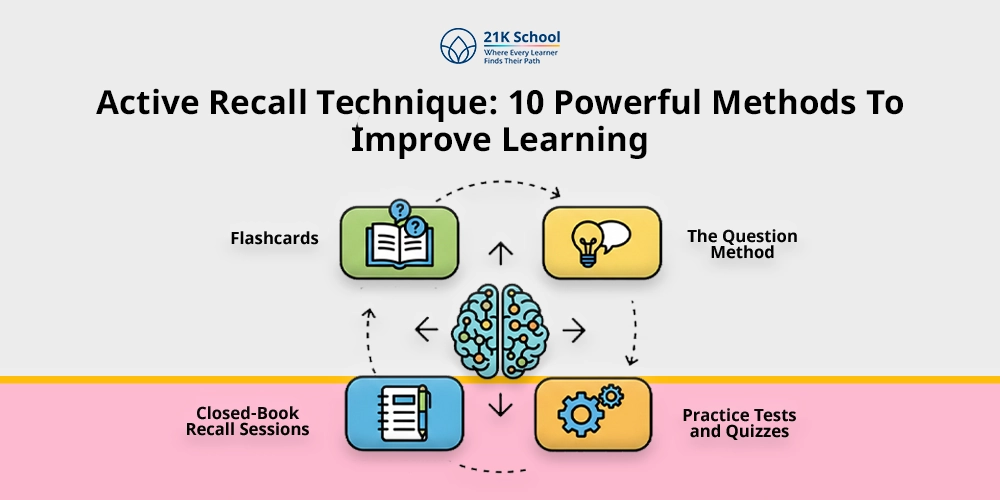
    Step 5: Apply the Active Recall Loop

    QuestionAttempt RecallCheck Answer\text{Question} \rightarrow \text{Attempt Recall} \rightarrow \text{Check Answer}Question→Attempt Recall→Check Answer

    This is the core of effective studying.

    Step 6: Review Weak Areas

    Focus on:

    • Incorrect answers
    • Difficult topics
    • Repeated mistakes

    Step 7: Repeat Daily

    Consistency is more important than intensity.

    Example: AI-Generated Active Recall Quiz

    Let’s say you’re studying biology.

    AI generates:

    Question: What is the function of mitochondria?
    Answer: Produces ATP (energy)

    Question: What is osmosis?
    Answer: Movement of water across a semi-permeable membrane

    Simple, but extremely effective.

    Advanced Strategies for Maximum Results

    1. Multi-Source Quiz Generation

    Combine:

    • Lecture notes
    • Textbooks
    • Research papers

    This creates deeper understanding.

    2. Scenario-Based Questions

    Ask AI:

    • “Create case-based questions”
    • “Generate real-world examples”

    Great for exams like medicine or business.

    3. Timed Practice Sessions

    Simulate exam conditions:

    • Set time limits
    • Avoid notes
    • Track performance

    4. AI Feedback Loop

    Ask AI:

    • “Explain why I got this wrong”
    • “Simplify this concept”

    This improves understanding.

    Pros and Cons of Using AI for Active Recall

    Advantages

    • Saves time
    • Automates quiz creation
    • Improves retention
    • Enhances student productivity
    • Makes studying interactive

    Limitations

    • May generate incorrect questions
    • Requires review
    • Can reduce deep thinking if overused

    So yeah, AI helps—but you still need to think critically.

    Ethical Use and Academic Integrity

    This is important.

    Use AI responsibly:

    • Don’t use quizzes during exams
    • Don’t rely blindly on answers
    • Verify information
    • Focus on learning

    Academic integrity is non-negotiable.

    How AI Active Recall Improves Learning

    AI-powered quizzes help students:

    • Retain information longer
    • Identify weak areas
    • Improve exam performance
    • Reduce study time
    • Stay engaged

    This is especially powerful for:

    • Literature review
    • Exam preparation
    • Thesis revision
    • Daily study routines

    Common Mistakes Students Make

    Avoid these:

    • Only reading answers without thinking
    • Not reviewing mistakes
    • Creating too many questions
    • Ignoring difficult topics
    • Using AI passively

    If you’re not struggling a little, you’re not learning.

    The Future of AI in Exam Preparation

    By 2026, active recall powered by AI is becoming the gold standard.

    Students who learn how to:

    • Generate smart quizzes
    • Practice consistently
    • Use AI effectively

    …will outperform others.

    Platforms like lrnai.xyz are helping students build these high-performance study systems.

    And honestly, once you switch to active recall, you’ll never go back to passive studying.

    Final Thoughts: Stop Reading, Start Testing

    Reading notes is easy.

    Remembering them is hard.

    With how to use AI to create active recall quizzes for exams, you can:

    • Study smarter
    • Learn faster
    • Retain more
    • Perform better

    But remember:

    AI is a tool—not a shortcut.

    If you use it wisely, your not just studying—you’re training your brain to think.

    Call to Action

    Ready to upgrade your study strategy?

    Start using AI to create active recall quizzes today and transform the way you prepare for exams. Then explore more powerful AI study techniques on lrnai.xyz to boost your student productivity and stay ahead.

    And if you’ve discovered a better quiz method, share it—because the smartest students don’t just study harder… they study smarter.
  • How to Use AI for Self-Testing Before the Final Exam (Save 10+ Hours & Study Smarter)

    How to Use AI for Self-Testing Before the Final Exam (Save 10+ Hours & Study Smarter)

    Look, I get it, university life is stressful but finals week hits different. You revise, reread, highlight everything… and still walk into the exam unsure if you actually know the material.

    Here’s the real talk: passive studying doesn’t work anymore. The students who consistently score higher are using active recall and self-testing—and in 2026, AI has made this process faster, smarter, and way more personalized.

    In this guide, you’ll learn exactly how to use AI for self-testing before the final exam, using the latest tools, strategies, and ethical practices that actually improve learning (not just shortcut it).


    Why Self-Testing with AI Is a Game-Changer in 2026

    Self-testing isn’t new—but AI has transformed it into a high-efficiency learning system.

    Key Benefits for Students

    • Instant quiz generation from notes, PDFs, or lectures
    • Adaptive difficulty based on your performance
    • Active recall + spaced repetition combined
    • Personalized feedback and explanations
    • Time-saving automation for student productivity

    Instead of guessing what to study, AI tells you exactly where your weak points are.

    And yes, this matters even more for thesis research and literature review-heavy subjects, where understanding beats memorization.


    The Science Behind AI Self-Testing

    AI-powered self-testing relies on two proven learning principles:

    1. Active Recall

    Forcing your brain to retrieve information strengthens memory pathways.

    2. Spaced Repetition

    Reviewing information at increasing intervals improves long-term retention.

    AI tools now combine both automatically—something that used to take hours to proccess manually.


    Best AI Tools for Self-Testing (2026)

    Here’s a quick comparison of the most effective tools students are using right now:

    AI Tool Comparison Table

    ToolBest ForKey FeatureLimitations
    ChatGPTCustom quizzesPrompt-based testingRequires good prompts
    Quizlet AIFlashcards & recallAuto-generated quizzesLimited depth
    Notion AINotes + testingIntegrated workspaceLess adaptive
    Anki + AI pluginsSpaced repetitionLong-term retentionSetup required
    Perplexity AIResearch-based testingSource-backed questionsNot quiz-focused

    Quick Insight

    • Use ChatGPT for flexible, exam-style testing
    • Use Anki for long-term memorization
    • Use Perplexity AI for research-heavy subjects and literature review

    Step-by-Step: How to Use AI for Self-Testing Before the Final Exam

    This is where most students go wrong—they use AI passively. Don’t do that.

    Follow this exact system:

    Step 1: Gather Your Study Material

    Upload or paste:

    • Lecture notes
    • PDFs
    • Past papers
    • Your own summaries

    The more structured your input, the better the output.


    Step 2: Generate Active Recall Questions

    Use a prompt like:

    “Create 20 exam-level questions from this content using a mix of MCQs, short answers, and case-based questions.”

    Then level it up:

    “Focus more on difficult concepts and areas students usually get wrong.”

    This is where AI starts acting like a tutor.


    Step 3: Simulate Real Exam Conditions

    • Set a timer
    • Don’t check answers immediately
    • Write responses on paper or digitally

    Your goal is to train recall under pressure, not just recognize answers.


    Step 4: Get AI Feedback

    After answering, ask:

    “Evaluate my answers and explain mistakes in simple terms.”

    AI will:

    • Highlight weak areas
    • Explain concepts clearly
    • Suggest what to revise

    This feedback loop is what most students never recieve in traditional studying.


    Step 5: Turn Mistakes into Flashcards

    Convert errors into:

    • Flashcards (Anki or Quizlet)
    • Short notes
    • Repeat quizzes

    Mistakes = your highest-value learning material.


    Step 6: Repeat with Increasing Difficulty

    Ask AI to:

    • Make harder questions
    • Combine topics
    • Add real-world scenarios

    This builds deep understanding, not surface-level memorization.


    AI Self-Testing Workflow (Checklist)

    Use this daily before exams:

    • Input notes into AI
    • Generate 15–30 questions
    • Attempt under timed conditions
    • Review answers with AI
    • Save mistakes
    • Re-test after 24 hours

    Simple. Effective. Proven.


    How AI Supports Thesis Research and Literature Review

    Self-testing isn’t just for exams.

    In 2026, students are using AI to test their understanding of:

    • Research papers
    • Academic frameworks
    • Theoretical concepts

    Example prompt:

    “Create critical thinking questions from this literature review section.”

    This helps you:

    • Understand arguments deeply
    • Prepare for viva exams
    • Improve academic writing

    Ethical Use: Don’t Let AI Hurt Your Learning

    Let’s be clear—AI can either boost your learning or destroy it.

    Follow These Academic Integrity Rules:

    • Use AI for practice, not cheating
    • Don’t memorize AI answers blindly
    • Always verify complex explanations
    • Avoid submitting AI-generated work as your own

    Your degree depends on your understanding—not the tool.


    Common Mistakes Students Make

    1. Using AI Like Google

    AI is not just for answers—it’s for training your brain.

    2. Skipping Active Recall

    Reading AI explanations ≠ learning.

    3. Not Reviewing Mistakes

    Your errors are more valuable than correct answers.

    4. Over-Reliance on One Tool

    Combine tools for best results.


    Pro Tips from an Academic Consultant

    • Mix AI quizzes with past papers
    • Use voice input for faster study sessions
    • Ask AI to explain like you’re a beginner
    • Study in short, focused sessions (25–40 mins)
    • Track weak topics daily

    And honestly? Consistency beats everything.


    The Future of AI Self-Testing for Students

    By 2026 and beyond, AI is moving toward:

    • Real-time performance tracking
    • Emotion-aware learning systems
    • Personalized study plans
    • Integrated academic dashboards

    Students who adapt early will always have an edge.


    Why Students Trust lrnai.xyz

    If you’re serious about improving your study system, lrnai.xyz is built exactly for you.

    You’ll find:

    • AI tool guides
    • Study systems
    • Research workflows
    • Ethical AI strategies

    It’s not about shortcuts—it’s about mastering the future of learning.


    Final Thoughts: Study Smarter, Not Harder

    Here’s the truth most students don’t hear:

    You don’t need more study hours—you need better study methods.

    Learning how to use AI for self-testing before the final exam can completely change how you prepare, revise, and perform.

    Start small:

    • Try one AI quiz today
    • Identify one weak topic
    • Improve one concept

    That’s how real progress happens.


    Call to Action

    Now it’s your turn.

    Try this AI self-testing method in your next study session and see the difference for yourself. Share your experience, refine your strategy, and explore more powerful AI study guides on lrnai.xyz.

    Because the future of learning isn’t coming—it’s already here.

  • How to Use AI for Time Management During Finals Week and Save 10+ Hours a Week

    How to Use AI for Time Management During Finals Week and Save 10+ Hours a Week

    Finals week has a way of turning even the most organized student into someone who’s just trying to survive. Deadlines stack up, sleep disappears, and suddenly your carefully planned schedule falls apart.

    Look, I get it, university life is stressful but here’s the good news: AI in 2026 isn’t just about writing essays—it’s your personal time management coach.

    If you learn how to use AI for time management during finals week, you can reclaim hours, reduce stress, and actually study smarter instead of harder.

    This guide will walk you through exactly how to do that—step by step—with real tools, practical workflows, and honest advice about academic integrity.

    And yes, we’ll keep it real. No fluff.


    Why AI is a Game-Changer for Finals Week

    AI tools have evolved far beyond simple chatbots. Today’s platforms combine:

    • Smart scheduling
    • Predictive workload analysis
    • Adaptive study planning
    • Real-time productivity tracking

    Apps like Notion AI, Motion, and ChatGPT can now analyze your deadlines, suggest study blocks, and even adjust plans automatically when you fall behind.

    What This Means for You

    Instead of asking:

    “What should I study next?”

    AI answers:

    “Based on your exam schedule and weak areas, here’s what you should focus on right now.”

    That shift alone can save hours of decision fatigue.


    The Core Strategy: AI-Powered Time Management System

    Here is the real talk about using AI for your assignments and study schedule:

    You don’t need 20 tools. You need a simple system.

    The 4-Part AI System

    1. Task Capture → AI organizes everything
    2. Time Allocation → AI builds your schedule
    3. Study Optimization → AI improves how you study
    4. Progress Feedback → AI adjusts your plan

    Let’s break this down.


    Best AI Tools for Finals Week (2026 Edition)

    AI Time Management Tools Comparison

    ToolBest ForKey FeatureIdeal Student
    Notion AIAll-in-one planningSmart notes + tasksOrganized learners
    MotionSchedulingAuto calendar planningBusy students
    ChatGPTStudy + planningCustom study plansFlexible learners
    TodoistTask managementAI prioritizationSimple workflow users
    Google Calendar + AITime blockingSmart remindersTraditional planners

    Quick Insight

    • Use Motion if your schedule is chaotic
    • Use Notion AI if you like structured dashboards
    • Use ChatGPT if you want flexibility and guidance

    Step-by-Step: How to Use AI for Time Management During Finals Week

    This is where most students mess up—they try tools but don’t build a system.

    Follow this exact proccess.

    Step 1: Dump Everything Into AI

    Open ChatGPT or Notion AI and input:

    • All exam dates
    • Assignment deadlines
    • Topics for each subject
    • Weak areas

    Prompt Example:

    “Create a finals week study plan based on these subjects and deadlines. Prioritize difficult topics.”

    This gives you a baseline plan instantly.


    Step 2: Let AI Build Your Schedule

    Now take it further with Motion.

    It will:

    • Automatically assign study blocks
    • Adjust when tasks are incomplete
    • Prevent overbooking

    This is huge. Manual scheduling is where students waste time.


    Step 3: Use AI for Smart Note-Taking

    AI tools now summarize lectures and readings in seconds.

    Use:

    • Notion AI for structured notes
    • ChatGPT for explanations

    This is especially useful for:

    • Literature review preparation
    • Thesis research
    • Complex concepts

    Instead of rereading chapters, you get:

    • Key ideas
    • Simplified explanations
    • Practice questions

    Step 4: Turn Notes into Active Recall

    Time management isn’t just about scheduling—it’s about efficient studying.

    Ask AI:

    “Turn these notes into quiz questions.”

    Now you’re using:

    • Active recall
    • Spaced repetition
    • Exam-focused learning

    This dramatically improves retention.


    Step 5: Daily AI Check-In (Most Students Skip This)

    Every night, ask:

    “Adjust my study plan based on what I completed today.”

    This creates a dynamic system.

    Instead of falling behind, your schedule adapts.


    AI Time Management Checklist for Students

    Before finals week starts, make sure you:

    • Input all deadlines into AI
    • Generate a study plan
    • Sync schedule with calendar
    • Set daily review prompts
    • Use AI for summarization
    • Use AI for quizzes

    If you skip this setup, AI won’t help much.


    Academic Integrity: Using AI the Right Way

    Let’s address the elephant in the room.

    AI can help—but misuse can hurt your academic career.

    Ethical Use Guidelines

    ✔ Use AI for:

    • Planning
    • Summarizing
    • Practice questions
    • Concept explanation

    ✖ Avoid:

    • Submitting AI-generated essays as your own
    • Copy-pasting answers without understanding

    Universities in 2026 are strict about academic integrity, and tools can detect misuse.

    Think of AI as:

    A tutor, not a shortcut.


    Advanced Strategy: AI + Deep Work

    Here’s something most students don’t realize.

    AI is powerful—but only if you combine it with focus.

    The Ideal Study Cycle

    1. AI plans your session
    2. You study (no distractions)
    3. AI tests you
    4. AI adjusts your next session

    This loop creates high-efficiency learning.


    Common Mistakes Students Make

    Let’s keep it honest.

    1. Over-relying on AI

    AI is a tool, not magic. You still need effort.

    2. Using too many apps

    Stick to 2–3 tools max.

    3. Ignoring weak subjects

    AI highlights weaknesses—but your still responsible for fixing them.

    4. Not reviewing daily

    This is where most students lose control of their schedule.


    How AI Supports Thesis and Research Work

    Even during finals, many students are working on research or a literature review.

    AI helps by:

    • Summarizing research papers
    • Extracting key findings
    • Organizing references

    Tools like ChatGPT and Notion AI can reduce hours of reading into minutes.

    Just remember: always verify sources.


    The Future of Student Productivity (2026 and Beyond)

    AI is moving toward:

    • Fully automated study planning
    • Personalized learning paths
    • Real-time performance analytics

    Students who learn these tools now will have a massive advantage—not just in exams, but in careers.

    And platforms like lrnai.xyz are built to help you stay ahead of that curve.


    Final Thoughts: Work Smarter, Not Harder

    Finals week doesn’t have to feel like chaos.

    If you apply what you’ve learned here about how to use AI for time management during finals week, you can:

    • Reduce stress
    • Study more effectively
    • Gain back valuable time

    Start simple. Pick one tool. Build your system.

    Then refine.


    Call to Action

    Now it’s your turn.

    Try one AI tool today and build your first smart study plan. See how much time you can actually save.

    And if you want more strategies like this, explore lrnai.xyz—your ultimate resource for mastering AI, boosting student productivity, and staying ahead in the future of learning.

    Also, share your own AI study hacks—because honestly, the best ideas often come from students like you.

  • How to Use AI to Generate Practice Questions for SAT/GRE and Boost Your Score Faster

    How to Use AI to Generate Practice Questions for SAT/GRE and Boost Your Score Faster

    Preparing for exams like the SAT or GRE can feel overwhelming. There’s so much content, so little time, and not nearly enough quality practice questions tailored to your level.

    Look, I get it, university life is stressful but standardized test prep can be even worse.

    Here’s the good news: AI in 2026 has completely transformed how students prepare for exams. Instead of relying on static question banks, you can now generate unlimited, personalized practice questions on demand.

    In this guide, you’ll learn exactly how to use AI to generate practice questions for SAT/GRE, improve retention, and study more efficiently—without compromising academic integrity.


    Why AI-Generated Practice Questions Are a Game-Changer

    Traditional test prep materials have limitations:

    • Fixed number of questions
    • Limited adaptability
    • Often not aligned with your weaknesses

    AI tools like ChatGPT, Quizlet, and Notion AI solve these problems by generating:

    • Unlimited practice questions
    • Difficulty-based variations
    • Instant explanations
    • Topic-specific quizzes

    What This Means for Students

    Instead of passively reviewing, you actively train your brain using:

    • Active recall
    • Spaced repetition
    • Adaptive testing

    That’s where real score improvement happens.


    Core Concept: AI as Your Personal Question Generator

    Here is the real talk about using AI for your assignments and test prep:

    AI doesn’t just give answers—it creates learning loops.

    The AI Learning Loop

    1. You input a topic
    2. AI generates questions
    3. You attempt answers
    4. AI evaluates and explains
    5. AI adapts difficulty

    This loop is far more effective than simply reading notes.


    Best AI Tools for Generating SAT/GRE Practice Questions (2026)

    Comparison Table: AI Tools for Test Prep

    ToolBest ForKey FeatureIdeal Use Case
    ChatGPTCustom questionsPrompt-based generationFlexible learners
    QuizletFlashcards + quizzesAI quiz modeQuick revision
    Notion AIStructured prepIntegrated notes + QsOrganized students
    Khan AcademyOfficial-style prepAI tutoringSAT-focused students
    MagooshGRE prepAdaptive practiceGrad-level learners

    Quick Insight

    • Use ChatGPT for full customization
    • Use Quizlet for fast quizzes
    • Use Khan Academy for exam-aligned content

    Step-by-Step: How to Use AI to Generate Practice Questions for SAT/GRE

    This is where most students go wrong—they use AI casually instead of strategically.

    Follow this exact proccess to get results.


    Step 1: Define Your Topic Clearly

    Open ChatGPT and start with a focused prompt.

    Bad prompt:

    “Give me SAT questions”

    Good prompt:

    “Generate 10 SAT-level algebra questions on linear equations with increasing difficulty and detailed explanations.”

    Clarity = better output.


    Step 2: Specify Difficulty Levels

    AI becomes powerful when you guide it.

    Example:

    “Create GRE verbal reasoning questions at medium difficulty, including passage-based questions.”

    You can even say:

    • Easy
    • Medium
    • Hard
    • Exam-level

    Step 3: Request Explanations and Solutions

    Never skip this.

    Ask:

    “Provide step-by-step solutions and explain common mistakes.”

    This transforms AI into a tutor—not just a generator.


    Step 4: Turn Weak Areas into Practice Sets

    Let’s say you struggle with:

    • Probability (GRE)
    • Reading comprehension (SAT)

    Ask AI:

    “Generate 15 practice questions focused only on my weak areas.”

    This is how you target improvement efficiently.


    Step 5: Create Timed Practice Tests

    Time pressure matters.

    Prompt:

    “Generate a 20-minute SAT mini test with mixed questions and scoring guide.”

    Now you simulate real exam conditions.


    Step 6: Use AI for Review and Feedback

    After answering, input your responses:

    “Check my answers and explain where I went wrong.”

    AI will:

    • Identify patterns
    • Highlight weak areas
    • Suggest next steps

    This feedback loop boosts student productivity massively.


    AI Practice Question Checklist

    Before each study session, make sure you:

    • Choose a specific topic
    • Set difficulty level
    • Request explanations
    • Practice under time constraints
    • Review mistakes with AI

    If your skipping any of these, your prep becomes less effective.


    Advanced Strategy: AI + Smart Note-Taking

    AI-generated questions become even more powerful when combined with notes.

    Use Notion AI to:

    • Store questions
    • Track mistakes
    • Organize by topic

    You can also:

    • Convert notes into quizzes
    • Build a personal question bank
    • Track progress over time

    This is especially useful for students juggling SAT/GRE with school or thesis work.


    Ethical Use and Academic Integrity

    Let’s be clear.

    Using AI to generate practice questions is completely ethical—as long as you use it correctly.

    Do This

    ✔ Practice concepts
    ✔ Understand solutions
    ✔ Build your own knowledge

    Avoid This

    ✖ Memorizing answers without understanding
    ✖ Using AI to cheat on actual exams

    Academic integrity matters, especially as AI tools become more advanced.


    Common Mistakes Students Make

    Let’s be honest—most students don’t use AI effectively.

    1. Asking vague prompts

    You get generic questions.

    2. Not reviewing answers

    Learning happens in the review phase.

    3. Ignoring explanations

    This is where deep understanding comes from.

    4. Overloading with too many questions

    Quality beats quantity.

    5. Not tracking progress

    You can’t improve what you don’t measure.


    How AI Supports GRE Research and Analytical Skills

    For GRE students, AI goes beyond practice questions.

    It helps with:

    • Analytical writing
    • Argument evaluation
    • Research-based reasoning

    Tools like ChatGPT can simulate essay prompts and critique your responses.

    This connects directly with skills used in:

    • Literature review
    • Academic writing
    • Graduate-level research

    The Future of AI in Test Prep (2026 and Beyond)

    AI is evolving rapidly.

    We’re seeing:

    • Fully adaptive learning systems
    • Real-time difficulty adjustment
    • Personalized study paths

    Soon, AI will know your strengths better than you do.

    Students who adopt these tools early will have a serious advantage.

    That’s exactly why platforms like lrnai.xyz exist—to help you master these tools and stay ahead.


    Final Thoughts: Study Smarter, Score Higher

    If you’ve been struggling with SAT or GRE prep, here’s the truth:

    It’s not about studying more. It’s about studying smarter.

    Learning how to use AI to generate practice questions for SAT/GRE gives you:

    • Unlimited practice
    • Personalized learning
    • Faster improvement

    Start simple. One topic. One tool. One session.

    Then build from there.


    Call to Action

    Now it’s your move.

    Open an AI tool like ChatGPT and generate your first set of practice questions today. Test yourself. Review your mistakes. Improve.

    And if you want more expert strategies, guides, and AI-powered learning systems, explore lrnai.xyz—your ultimate destination for mastering the future of education.

    Also, share your favorite AI study techniques—because your experience might help another student succeed.

  • How to Use AI for Project Management in Student Societies and Save 10+ Hours Every Week

    How to Use AI for Project Management in Student Societies and Save 10+ Hours Every Week

    University life is already demanding—lectures, assignments, exams, and maybe even a thesis or literature review. Now add managing a student society on top of that, and things can quickly spiral.

    Look, I get it, university life is stressful but leading or participating in a student society shouldn’t feel like chaos.

    The good news? In 2026, AI tools have evolved into powerful assistants that can handle planning, communication, scheduling, and even decision-making. If used properly—and ethically—you can transform your society into a highly organized, high-impact team.

    This guide will show you exactly how to use AI for project management in student societies, step-by-step.

    Why AI is a Game-Changer for Student Societies

    Managing a student society is basically running a mini startup. You deal with:

    • Event planning
    • Team coordination
    • Budget tracking
    • Marketing campaigns
    • Academic responsibilities alongside it

    AI helps by automating repetitive work, improving communication, and giving you smart insights.

    Here is the real talk about using AI for your assignments and leadership tasks: AI won’t replace your thinking—but it will amplify it.

    In fact, combining AI with strong academic integrity ensures you stay ethical while boosting productivity.

    Key AI Capabilities for Project Management

    1. Smart Task Automation

    AI tools can automatically:

    • Assign tasks based on member availability
    • Send reminders
    • Track deadlines

    Tools like Asana and Trello now include AI assistants that predict delays and suggest timelines.

    2. AI-Powered Meeting Summaries

    No more messy meeting notes.

    Use tools like Notion or ChatGPT to:

    • Summarize meetings
    • Extract action points
    • Assign responsibilities

    This is especially helpful when juggling society work and thesis research.

    3. Intelligent Planning & Scheduling

    AI can:

    • Suggest best meeting times
    • Optimize event schedules
    • Avoid clashes with academic deadlines

    4. Communication Enhancement

    AI helps draft:

    • Emails
    • Announcements
    • Social media posts

    This is perfect for maintaining professional communication without spending hours writing.

    5. Data-Driven Decision Making

    AI tools analyze:

    • Event performance
    • Member engagement
    • Budget efficiency

    So instead of guessing, your decisions are backed by real data.

    Best AI Tools for Student Society Project Management (2026)

    Here’s a practical comparison of the most useful tools:

    ToolBest ForKey AI FeaturesEase of UseIdeal For
    Notion AIAll-in-one workspaceNotes, summaries, task automationHighSmall to medium societies
    Trello AIVisual task trackingSmart boards, automationVery HighBeginners
    Asana AIAdvanced project trackingWorkflow prediction, automationMediumLarge teams
    ChatGPTContent + planningBrainstorming, writing, summarizationVery HighAll societies

    If you’re just starting, combine Notion + ChatGPT. That combo alone can save you 8–10 hours weekly.

    Step-by-Step: How to Use AI for Project Management in Student Societies

    Step 1: Centralize Everything in One AI Workspace

    Start by creating a shared workspace using Notion.

    Set up:

    • Task boards
    • Event calendars
    • Member directories

    Then use AI to organize it automatically.

    Example prompt:

    “Organize this student society event plan into tasks with deadlines and assign roles.”

    Boom—you just saved an hour of manual planning.

    Step 2: Automate Task Assignment

    Use Trello or Asana AI features to:

    • Assign tasks based on workload
    • Set deadlines automatically
    • Trigger reminders

    This reduces confusion and ensures accountability.

    Small tip: Always review AI suggestions. Don’t blindly trust it—your judgement still matters.

    Step 3: Use AI for Meeting Productivity

    After every meeting:

    • Paste notes into ChatGPT
    • Ask it to summarize key points
    • Generate action items

    Example:

    “Summarize this meeting and list actionable tasks with deadlines.”

    This ensures nothing gets missed—even if your tired after a long day.

    Step 4: Plan Events with AI Assistance

    Ask AI:

    • “Create a timeline for a university tech event”
    • “Generate a checklist for organizing a seminar”

    It will give you structured plans instantly.

    This is especially useful during peak academic periods like exams or literature review deadlines.

    Step 5: Improve Communication

    Use AI to draft:

    • Emails to sponsors
    • Event announcements
    • Social media posts

    You can even refine tone:

    “Make this email more professional but friendly.”

    Just double-check before sending—AI can sometimes sound slightly off.

    Step 6: Track Progress with AI Insights

    Use dashboards in Asana or Notion to:

    • Monitor task completion
    • Identify delays
    • Adjust plans

    AI will highlight bottlenecks you might not notice.

    AI Tool Checklist for Student Leaders

    Before adopting any AI system, make sure it meets these criteria:

    • Supports collaboration
    • Offers AI automation features
    • Integrates with calendars and emails
    • Helps with note-taking and summaries
    • Maintains data privacy (important for academic integrity)
    • Easy for your team to learn

    If a tool feels too complex, your team won’t use it—simple as that.

    Pros and Cons of Using AI in Student Societies

    Pros

    • Saves time (huge advantage)
    • Improves organization
    • Enhances communication
    • Supports better decision-making
    • Reduces stress

    Cons

    • Over-reliance can reduce critical thinking
    • Requires learning curve
    • Risk of misuse (violating academic integrity)
    • Sometimes generates inaccurate suggestions

    Here’s the honest part: AI is powerful, but it’s not perfect. You still need to think, lead, and verify.

    Ethical Use of AI in Student Organizations

    In 2026, ethical AI usage is a big deal.

    Always:

    • Use AI as a support tool, not a replacement
    • Avoid plagiarism in reports or presentations
    • Respect privacy when handling member data
    • Be transparent about AI usage

    This is especially important if your society is involved in research, thesis work, or academic collaborations.

    Advanced Tips (Most Students Miss This)

    Combine AI with Academic Workflows

    Use the same AI tools for:

    • Project management
    • Literature review
    • Smart note-taking

    This creates a seamless productivity system.

    Create AI Templates

    Save prompts like:

    • Event planning template
    • Meeting summary template
    • Weekly progress report template

    This makes your workflow faster every time.

    Train Your Team

    Don’t keep AI to yourself.

    Teach your team:

    • How to use it
    • When to use it
    • When NOT to use it

    Otherwise, you’ll end up doing everything anyway.

    Why lrnai.xyz is Your Go-To Resource

    If you’re serious about mastering AI for student productivity, lrnai.xyz is built exactly for you.

    From AI-powered thesis research to smart note-taking systems and ethical usage guides, it covers everything you need to succeed in modern academia.

    Think of it as your digital mentor in this AI-driven world.

    Final Thoughts

    Using AI for project management in student societies isn’t just a productivity hack—it’s becoming a necessity.

    The students who learn this now will:

    • Lead better teams
    • Manage time smarter
    • Reduce stress significantly

    And honestly, your future self will thank you.

    Yes, there might be a slight learning curve. Yes, you might make a few mistakes (we all do). But once you get the hang of it, the results are worth it.

    Call to Action

    Start small today.

    Pick one tool—maybe Notion or ChatGPT—and apply it to your next society task. You’ll quickly see the difference.

    Then come back to lrnai.xyz for more practical AI guides, share your experience, and level up your student productivity game.

    Because in 2026, it’s not about working harder—it’s about working smarter.