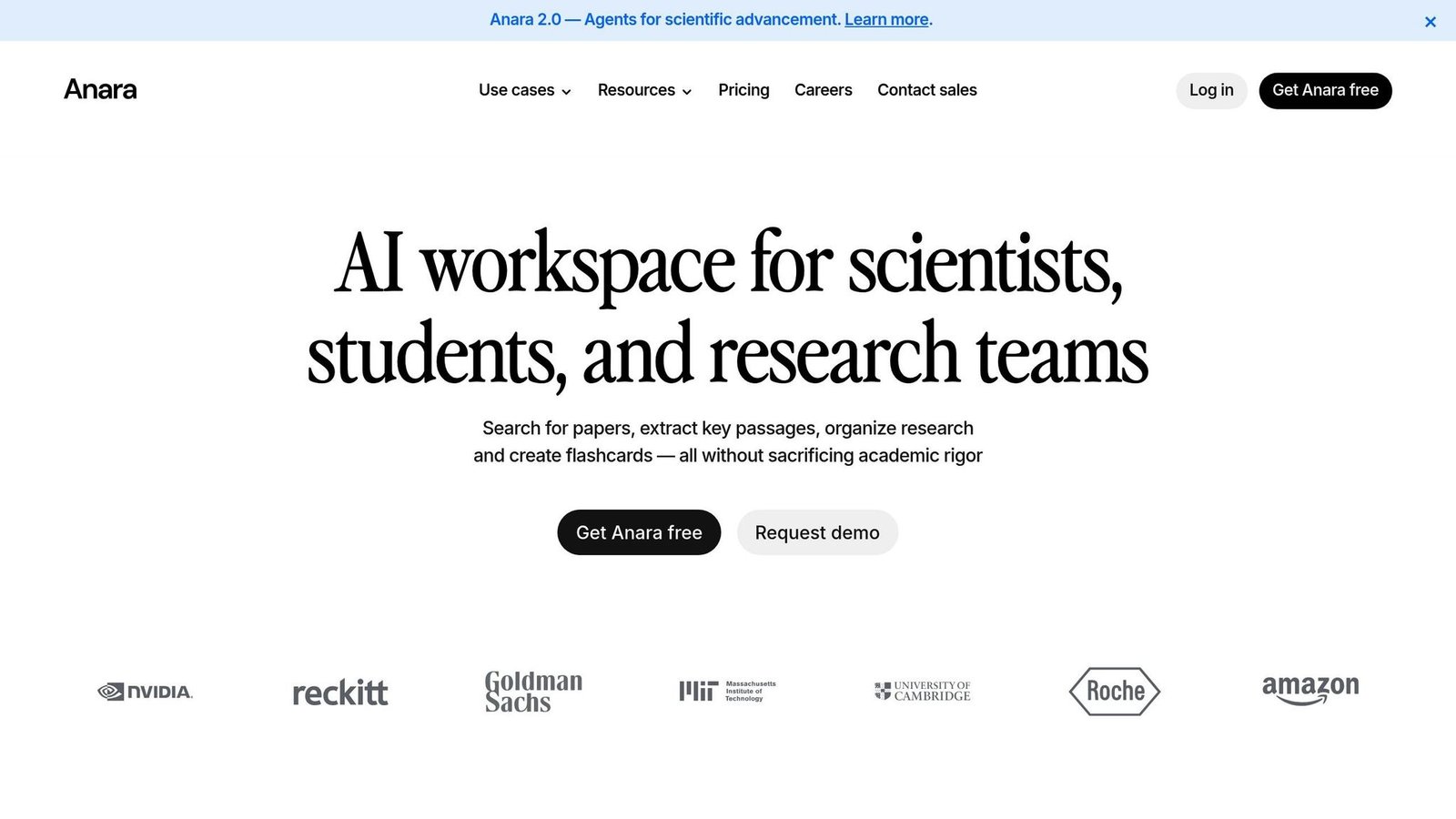
Look, I get it, university life is stressful but finding credible academic sources is often harder than writing the assignment itself. You open Google, type your topic, and suddenly you’re drowning in blogs, outdated studies, and questionable websites.
Here’s the reality: in 2026, students who know how to find credible academic sources using AI search engines are miles ahead of everyone else.
AI isn’t just helping you search—it’s helping you think like a researcher.
In this guide, you’ll learn exactly how to use modern AI tools to find trustworthy, high-quality academic sources in minutes, not hours. And if you’re serious about mastering AI for education, platforms like lrnai.xyz are becoming essential learning hubs.

Why Finding Credible Sources Is a Big Deal in 2026
Before diving into tools, let’s talk about why this matters more than ever.
1. Information Overload
There are millions of articles online, but only a fraction are academically reliable.
2. Fake or Low-Quality Content
Not everything that looks “academic” actually is. Some sources lack peer review or proper citations.
3. Time Pressure
Students don’t have hours to manually filter sources anymore.
4. Academic Integrity Risks
Using unreliable sources can weaken your argument—or worse, harm your credibility.
This is why AI-powered search engines are changing the game .

What Are AI Search Engines for Academic Research?
AI search engines go beyond keyword matching. They:
- Understand context and intent
- Prioritize peer-reviewed research
- Provide summarized insights
- Show citations and references
In short, they act like a research assistant who never gets tired.
Here is the real talk about using AI for your assignments: it’s not about replacing effort—it’s about making smarter decisions faster.
Best AI Search Engines for Finding Academic Sources
Let’s compare some of the top tools students are using in 2026.
AI Search Engine Comparison Table
| Feature | Perplexity AI | Elicit | Semantic Scholar |
|---|---|---|---|
| Citation Support | Strong | Very Strong | Excellent |
| Academic Focus | Medium-High | High | Very High |
| Literature Review Help | Good | Excellent | Excellent |
| Ease of Use | Very Easy | Moderate | Easy |
| Best For | Quick research | Deep analysis | Verified sources |
Each tool serves a slightly different purpose, so your choice depends on your academic needs.
AI Tool Checklist for Credible Sources
Before trusting any AI search engine, make sure it:
- Shows citations with links
- Prioritizes peer-reviewed journals
- Displays publication dates
- Provides author information
- Allows source verification
If your tool doesn’t do these, it’s not reliable enough for academic work.
Step-by-Step: How to Find Credible Academic Sources Using AI Search Engines
Now let’s break this down into a simple, actionable proccess you can follow.
Step 1: Start with a Clear Research Question
Instead of searching:
“climate change”
Try:
“What are the latest peer-reviewed studies on climate change impact on agriculture?”
Specific queries = better results.
Step 2: Use an AI Search Engine
Start with tools like:
- Perplexity AI
- Elicit
- Semantic Scholar
These tools are designed for academic discovery, not general browsing.
Step 3: Analyze the Results Carefully
Look for:
- Journal names
- Author credentials
- Citation counts
- Publication year
AI will often summarize results—but don’t stop there.
Step 4: Open and Verify Sources
Always click into the original paper.
Check:
- Is it peer-reviewed?
- Is the journal reputable?
- Are references included?
This step protects your academic integrity.
Step 5: Ask AI to Refine Results
Use follow-up prompts like:
- “Show only peer-reviewed sources”
- “Find studies published after 2022”
- “Compare top 5 research papers on this topic”
This helps narrow down to the most relevant material.
Step 6: Export and Organize Sources
Use AI or reference managers to:
- Save PDFs
- Generate citations
- Organize your literature review
This is where student productivity really improves.
Advanced Strategies for Smarter Research
Once you understand the basics, you can level up your research skills.
1. Multi-Tool Approach
Don’t rely on one AI tool. Combine results from multiple platforms for better accuracy.
2. Citation Chaining
Find one strong paper, then explore its references.
AI tools make this incredibly fast.
3. Thematic Search
Ask AI:
“What are the main themes in this research area?”
Perfect for literature review writing.
4. Gap Identification
Use prompts like:
“What gaps exist in current research on this topic?”
This is gold for thesis students.
Pros and Cons of Using AI Search Engines
Advantages
- Saves hours of research time
- Improves accuracy of sources
- Enhances literature review quality
- Boosts student productivity
- Simplifies complex topics
Limitations
- May overlook niche papers
- Requires manual verification
- Some tools have paywalls
- Risk of over-reliance
So yeah, AI is powerful—but it’s not perfect.
Ethical Use and Academic Integrity
Let’s be clear: using AI to find sources is completely acceptable.
But misuse happens when students:
- Copy summaries without reading
- Skip proper citation
- Trust AI blindly
Ethical use means:
- Verifying all sources
- Understanding the content
- Citing correctly
If you don’t do this, your research quality will suffer—even if your using advanced tools.
How AI Improves Literature Reviews
AI search engines are especially useful for literature reviews.
They can:
- Summarize multiple studies
- Identify trends
- Compare findings
- Highlight contradictions
Instead of reading 20 papers manually, you can analyze them strategically.
That’s a massive time saver.
Smart Note-Taking with AI Search Tools
Modern AI tools now integrate with note-taking systems to:
- Auto-generate summaries
- Highlight key arguments
- Tag important concepts
This creates a streamlined research workflow.
Imagine finding sources, summarizing them, and organizing notes—all in one place.
That’s the future of student productivity.
Common Mistakes Students Make
Let me be honest—most students misuse AI search engines.
Avoid these mistakes:
- Using vague queries
- Ignoring source credibility
- Not checking publication dates
- Over-relying on summaries
- Skipping original papers
AI helps you find information, but it doesn’t replace critical thinking.
The Future of AI in Academic Research
By 2026, AI search engines are becoming standard tools in education.
Students who learn how to:
- Find credible sources quickly
- Evaluate research quality
- Organize information effectively
…will always have an edge.
Platforms like lrnai.xyz are helping students adapt to this shift with practical guides and real-world strategies.
And honestly, we’re just getting started.
Final Thoughts: Research Smarter, Not Harder
Finding credible academic sources used to be slow and frustrating.
Now, with AI search engines, it’s fast, efficient, and even enjoyable.
But remember:
AI doesn’t make you a better student—how you use it does.
If you combine AI tools with critical thinking and ethical practices, you’ll:
- Improve your research quality
- Save time
- Strengthen your arguments
- Stay ahead academically
So the next time you start an assignment, don’t just search—search smart.
Call to Action
Ready to transform your research process?
Start using AI search engines today and see the difference in your speed and accuracy. Then explore more powerful AI learning strategies on lrnai.xyz—your ultimate destination for mastering the future of education.
And if you’ve discovered a unique research workflow, share it. Because the smartest students don’t just learn—they innovate.
Leave a Reply