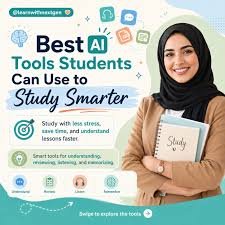
Look, I get it, university life is stressful but finals week hits different. You revise, reread, highlight everything… and still walk into the exam unsure if you actually know the material.
Here’s the real talk: passive studying doesn’t work anymore. The students who consistently score higher are using active recall and self-testing—and in 2026, AI has made this process faster, smarter, and way more personalized.
In this guide, you’ll learn exactly how to use AI for self-testing before the final exam, using the latest tools, strategies, and ethical practices that actually improve learning (not just shortcut it).
Why Self-Testing with AI Is a Game-Changer in 2026
Self-testing isn’t new—but AI has transformed it into a high-efficiency learning system.
Key Benefits for Students
- Instant quiz generation from notes, PDFs, or lectures
- Adaptive difficulty based on your performance
- Active recall + spaced repetition combined
- Personalized feedback and explanations
- Time-saving automation for student productivity
Instead of guessing what to study, AI tells you exactly where your weak points are.
And yes, this matters even more for thesis research and literature review-heavy subjects, where understanding beats memorization.
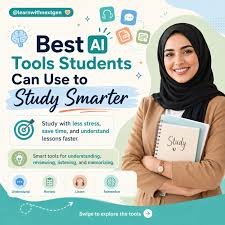
The Science Behind AI Self-Testing
AI-powered self-testing relies on two proven learning principles:
1. Active Recall
Forcing your brain to retrieve information strengthens memory pathways.
2. Spaced Repetition
Reviewing information at increasing intervals improves long-term retention.
AI tools now combine both automatically—something that used to take hours to proccess manually.
Best AI Tools for Self-Testing (2026)
Here’s a quick comparison of the most effective tools students are using right now:
AI Tool Comparison Table
| Tool | Best For | Key Feature | Limitations |
|---|---|---|---|
| ChatGPT | Custom quizzes | Prompt-based testing | Requires good prompts |
| Quizlet AI | Flashcards & recall | Auto-generated quizzes | Limited depth |
| Notion AI | Notes + testing | Integrated workspace | Less adaptive |
| Anki + AI plugins | Spaced repetition | Long-term retention | Setup required |
| Perplexity AI | Research-based testing | Source-backed questions | Not quiz-focused |
Quick Insight
- Use ChatGPT for flexible, exam-style testing
- Use Anki for long-term memorization
- Use Perplexity AI for research-heavy subjects and literature review
Step-by-Step: How to Use AI for Self-Testing Before the Final Exam
This is where most students go wrong—they use AI passively. Don’t do that.
Follow this exact system:
Step 1: Gather Your Study Material
Upload or paste:
- Lecture notes
- PDFs
- Past papers
- Your own summaries
The more structured your input, the better the output.
Step 2: Generate Active Recall Questions
Use a prompt like:
“Create 20 exam-level questions from this content using a mix of MCQs, short answers, and case-based questions.”
Then level it up:
“Focus more on difficult concepts and areas students usually get wrong.”
This is where AI starts acting like a tutor.
Step 3: Simulate Real Exam Conditions
- Set a timer
- Don’t check answers immediately
- Write responses on paper or digitally
Your goal is to train recall under pressure, not just recognize answers.
Step 4: Get AI Feedback
After answering, ask:
“Evaluate my answers and explain mistakes in simple terms.”
AI will:
- Highlight weak areas
- Explain concepts clearly
- Suggest what to revise
This feedback loop is what most students never recieve in traditional studying.
Step 5: Turn Mistakes into Flashcards
Convert errors into:
- Flashcards (Anki or Quizlet)
- Short notes
- Repeat quizzes
Mistakes = your highest-value learning material.
Step 6: Repeat with Increasing Difficulty
Ask AI to:
- Make harder questions
- Combine topics
- Add real-world scenarios
This builds deep understanding, not surface-level memorization.
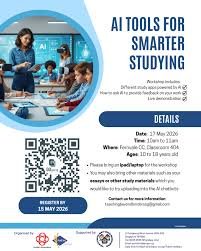
AI Self-Testing Workflow (Checklist)
Use this daily before exams:
- Input notes into AI
- Generate 15–30 questions
- Attempt under timed conditions
- Review answers with AI
- Save mistakes
- Re-test after 24 hours
Simple. Effective. Proven.
How AI Supports Thesis Research and Literature Review
Self-testing isn’t just for exams.
In 2026, students are using AI to test their understanding of:
- Research papers
- Academic frameworks
- Theoretical concepts
Example prompt:
“Create critical thinking questions from this literature review section.”
This helps you:
- Understand arguments deeply
- Prepare for viva exams
- Improve academic writing
Ethical Use: Don’t Let AI Hurt Your Learning
Let’s be clear—AI can either boost your learning or destroy it.
Follow These Academic Integrity Rules:
- Use AI for practice, not cheating
- Don’t memorize AI answers blindly
- Always verify complex explanations
- Avoid submitting AI-generated work as your own
Your degree depends on your understanding—not the tool.
Common Mistakes Students Make
1. Using AI Like Google
AI is not just for answers—it’s for training your brain.
2. Skipping Active Recall
Reading AI explanations ≠ learning.
3. Not Reviewing Mistakes
Your errors are more valuable than correct answers.
4. Over-Reliance on One Tool
Combine tools for best results.
Pro Tips from an Academic Consultant
- Mix AI quizzes with past papers
- Use voice input for faster study sessions
- Ask AI to explain like you’re a beginner
- Study in short, focused sessions (25–40 mins)
- Track weak topics daily
And honestly? Consistency beats everything.
The Future of AI Self-Testing for Students
By 2026 and beyond, AI is moving toward:
- Real-time performance tracking
- Emotion-aware learning systems
- Personalized study plans
- Integrated academic dashboards
Students who adapt early will always have an edge.
Why Students Trust lrnai.xyz
If you’re serious about improving your study system, lrnai.xyz is built exactly for you.
You’ll find:
- AI tool guides
- Study systems
- Research workflows
- Ethical AI strategies
It’s not about shortcuts—it’s about mastering the future of learning.
Final Thoughts: Study Smarter, Not Harder
Here’s the truth most students don’t hear:
You don’t need more study hours—you need better study methods.
Learning how to use AI for self-testing before the final exam can completely change how you prepare, revise, and perform.
Start small:
- Try one AI quiz today
- Identify one weak topic
- Improve one concept
That’s how real progress happens.
Call to Action
Now it’s your turn.
Try this AI self-testing method in your next study session and see the difference for yourself. Share your experience, refine your strategy, and explore more powerful AI study guides on lrnai.xyz.
Because the future of learning isn’t coming—it’s already here.
Leave a Reply