
Look, I get it, university life is stressful but managing your bibliography might be one of the most frustrating parts of academic writing.
You spend hours collecting sources, formatting citations, organizing references—and somehow things still get messy. Duplicate entries, missing authors, wrong formats… it’s a nightmare.
But here’s the shift: in 2026, AI-powered tools can automate bibliography management almost completely.
That means less time formatting and more time actually thinking.
In this guide, you’ll learn exactly how to use AI to automate bibliography management, improve your literature review workflow, and boost your overall student productivity.
And if you’re serious about mastering AI in education, lrnai.xyz is quickly becoming the go-to resource for future-ready learners.
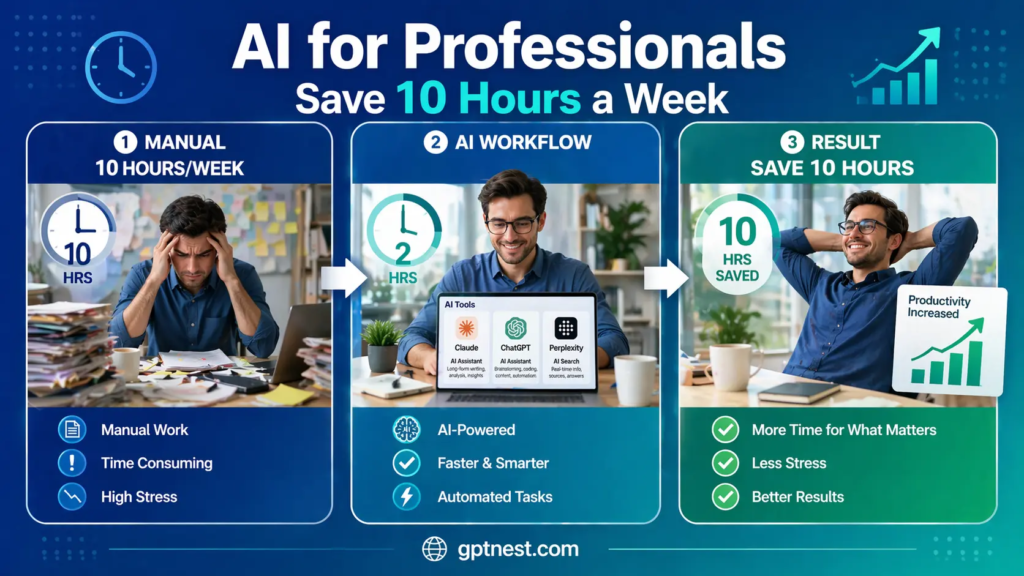
Why Bibliography Management Is So Time-Consuming
Before we talk solutions, let’s understand the problem.
1. Manual Data Entry
Typing author names, titles, and journal details takes time—and errors are common.
2. Multiple Citation Styles
Switching between APA, MLA, Harvard, etc. can be confusing.
3. Disorganized Sources
Without proper systems, your references become chaotic quickly.
4. Academic Integrity Risks
Incorrect citations can lead to plagiarism concerns or lost marks.
This is where AI becomes a game changer.
What Does AI-Powered Bibliography Management Mean?
AI tools automate the entire process by:
- Extracting metadata from PDFs and URLs
- Generating citations instantly
- Organizing references automatically
- Syncing with writing tools
- Updating citation styles in real-time
In 2026, these tools are not just managers—they are intelligent research assistants.
Here is the real talk about using AI for your assignments: it’s not about doing less work—it’s about doing the right work faster.
Best AI Tools to Automate Bibliography Management
Let’s compare the top tools students are using today.
AI Bibliography Tool Comparison Table
| Feature | Zotero | Mendeley | EndNote |
|---|---|---|---|
| Auto Metadata Extraction | Excellent | Excellent | Very High |
| AI Organization | Strong | Strong | Very Strong |
| Citation Styles | 9,000+ | 7,000+ | 6,000+ |
| Cloud Sync | Yes | Yes | Yes |
| Best For | Students | Researchers | Advanced users |
Recommended Tools
- Zotero
- Mendeley
- EndNote
Each tool offers powerful automation features, but choosing the right one depends on your workflow.
AI Tool Checklist for Bibliography Automation
Before selecting a tool, make sure it can:
- Automatically extract citation data
- Organize references into folders or tags
- Generate in-text citations
- Sync with Word or Google Docs
- Support multiple citation styles
If your tool lacks these, it’s not worth your time.
Step-by-Step: How to Use AI to Automate Bibliography Management
Let’s break this into a simple, practical proccess you can follow.
Step 1: Install a Reference Manager
Start by setting up a tool like Zotero or Mendeley.
Install:
- Desktop app
- Browser extension
This allows one-click saving of sources.
Step 2: Collect Sources Automatically
As you browse:
- Click the extension
- Save journal articles instantly
- Import PDFs directly
AI will extract metadata like:
- Author
- Title
- Year
- Journal
No manual typing needed.
Step 3: Organize Your Library
Create folders based on:
- Topics
- Chapters
- Research questions
Use tags to label:
- Important papers
- Key themes
- Methodologies
This makes your literature review much easier.
Step 4: Generate Citations Instantly
When writing:
- Insert citations with one click
- Choose APA, MLA, or other styles
AI ensures correct formatting automatically.
Step 5: Auto-Generate Bibliography
At the end of your document:
- Click “Insert Bibliography”
- AI compiles all references instantly
No manual formatting required.
Step 6: Sync Across Devices
Your library updates automatically across:
- Laptop
- Mobile
- Cloud
This keeps everything accessible and organized.
Advanced Strategies for Smart Bibliography Management
Once you understand the basics, try these techniques.
1. AI-Powered Tagging
Some tools suggest tags automatically based on content.
This improves organization.
2. Duplicate Detection
AI can identify and remove duplicate entries.
Very useful for large research projects.
3. Smart Recommendations
Tools may suggest related papers based on your library.
Great for expanding your research.
4. Integration with AI Writing Tools
Combine reference managers with AI assistants to:
- Summarize papers
- Generate citations
- Improve writing
This creates a seamless academic workflow.
Pros and Cons of AI Bibliography Automation
Advantages
- Saves hours of manual work
- Improves accuracy
- Enhances organization
- Boosts student productivity
- Supports literature review writing
Limitations
- Requires initial setup
- Occasional metadata errors
- Learning curve for beginners
- Over-reliance risk
So yeah, AI makes things easier—but you still need to stay in control.
Ethical Use and Academic Integrity
Let’s talk about something important.
Using AI for bibliography management is completely acceptable—but only if used correctly.
Ethical use means:
- Verifying citation accuracy
- Using real sources
- Avoiding fabricated references
- Understanding your materials
If you blindly trust AI without checking, your work may suffer.
And honestly, professors notice these mistakes.
How AI Transforms Literature Reviews
Bibliography management is a core part of literature review writing.
AI helps you:
- Organize dozens of sources
- Maintain consistent citations
- Track references easily
- Focus on analysis instead of formatting
This is a massive productivity boost for Master’s and PhD students.
Smart Note-Taking + Bibliography Integration
Modern AI tools combine:
- Note-taking
- Citation management
- Research organization
You can:
- Attach notes to each paper
- Highlight key sections
- Store insights alongside citations
This creates a powerful research system.
Common Mistakes Students Make
Let me be honest—many students misuse these tools.
Avoid these mistakes:
- Not organizing sources early
- Ignoring metadata errors
- Using wrong citation style
- Overloading with unnecessary papers
- Skipping manual verification
If your references are messy, your whole paper looks weak.
The Future of AI in Academic Workflows
By 2026, AI is fully integrated into research and writing.
Students who learn how to:
- Automate bibliography management
- Organize research efficiently
- Maintain academic integrity
…will always stay ahead.
Platforms like lrnai.xyz are helping students adapt with practical guides and real-world strategies.
And honestly, this is just the beginning.
Final Thoughts: Organize Smarter, Not Harder
Managing your bibliography doesn’t have to be painful.
With AI, you can:
- Automate citations
- Stay organized
- Save time
- Focus on meaningful work
But remember:
AI is a tool—not a replacement for understanding.
If you use it wisely, your not just saving time—you’re building a smarter academic workflow.
Call to Action
Ready to take control of your research?
Start using AI to automate bibliography management today and experience the difference. Then explore more powerful AI strategies on lrnai.xyz to boost your student productivity, strengthen your academic integrity, and master the future of learning.
And if you’ve discovered a better way to manage your references, share it—because the best students don’t just follow systems, they improve them.
Leave a Reply