Look, I get it, university life is stressful but philosophy students face a very different kind of challenge.
You’re not solving equations or memorizing formulas—you’re trying to understand abstract ideas like existence, consciousness, ethics, and reality itself.
And sometimes? One paragraph from a philosopher can take hours to understand.
Here’s the shift: in 2026, AI tools for philosophy students are transforming how complex theories are simplified, analyzed, and applied in academic work.
In this guide, you’ll learn the best AI for philosophy students to simplify complex theories, how to use these tools step-by-step, and how to strengthen your thinking while maintaining academic integrity.
If you’re serious about mastering AI in education and critical thinking, lrnai.xyz is becoming the ultimate resource for students who want to learn smarter.
Why Philosophy Is So Difficult for Students
Before we jump into tools, let’s talk about the real struggle.
1. Abstract Concepts
Philosophy deals with ideas like:
- Reality and existence
- Ethics and morality
- Knowledge and truth
These are not easy to grasp.
2. Dense Academic Language
Philosophers often write in complex, layered language.
3. Multiple Interpretations
There is rarely one “correct” answer.
4. Deep Analytical Thinking Required
You must:
- Interpret arguments
- Critically evaluate ideas
- Build logical reasoning
This is exactly where AI becomes a powerful academic assistant.
What AI Does for Philosophy Students
AI tools help students by:
- Simplifying complex philosophical texts
- Breaking down arguments step-by-step
- Comparing philosophical theories
- Supporting essay writing
- Enhancing critical thinking
Here is the real talk about using AI for your assignments: it’s not about replacing thinking—it’s about sharpening it.
Best AI for Philosophy Students to Simplify Complex Theories
Let’s compare the most useful tools in 2026.
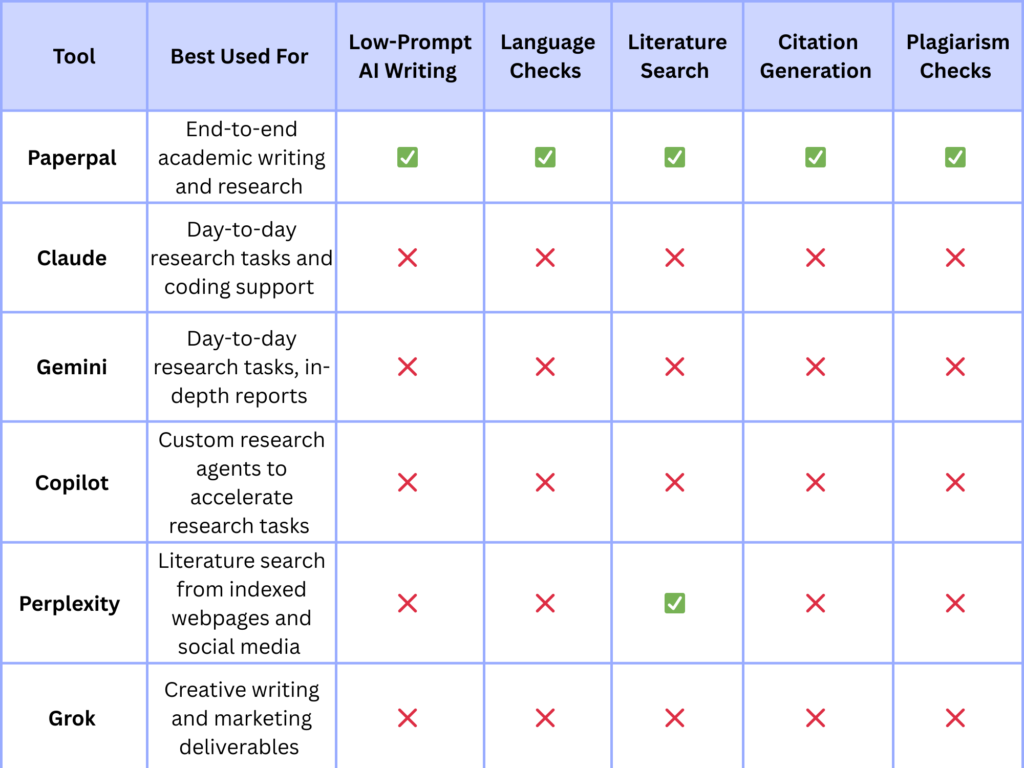
AI Tool Comparison Table
| Feature | ChatGPT | Perplexity AI | Notion AI |
|---|---|---|---|
| Text Simplification | Excellent | High | High |
| Argument Analysis | Excellent | Strong | Moderate |
| Research Support | High | Excellent | Moderate |
| Note Organization | Moderate | Low | Excellent |
| Best For | Deep understanding | Research | Note-taking |
Recommended Tools
- ChatGPT
- Perplexity AI
- Notion AI
Each tool plays a different role in philosophical learning.
AI Tool Checklist for Philosophy Students
Before choosing a tool, ensure it can:
- Simplify complex philosophical texts
- Explain arguments clearly
- Compare theories and thinkers
- Support essay writing
- Help organize notes
If a tool cannot do these, it won’t be useful for philosophy studies.
Step-by-Step: How to Use AI to Simplify Philosophy Theories
Let’s break this into a practical proccess you can follow.
Step 1: Select a Philosophical Text
Example:
- Plato’s Republic
- Kant’s Critique of Pure Reason
- Nietzsche’s works
Step 2: Ask AI to Simplify the Text
Prompt example:
“Explain this paragraph in simple terms like I’m a beginner.”
Step 3: Break Down the Argument
Ask:
- “What is the main argument?”
- “What are the key assumptions?”
Step 4: Understand Logical Structure
Premise 1→Premise 2→Conclusion
This helps you see how philosophical arguments are constructed.
Step 5: Compare Philosophical Theories
Ask:
- “Compare Kant and Nietzsche on morality”
- “Difference between rationalism and empiricism”
Step 6: Apply Theory to Real Life
Ask:
- “Give real-world examples of this theory”
- “How does this apply to modern society?”
Step 7: Generate Study Notes
Ask AI:
- “Summarize this theory in bullet points”
- “Create revision notes for exam preparation”
This saves hours of manual note-making.
Advanced Strategies for Philosophy Students
Once you understand basics, level up with these techniques.
1. Debate Simulation Mode
Ask:
“Argue for and against this philosophical theory”
2. Critical Analysis Mode
Ask:
“What are the weaknesses of this argument?”
3. Essay Structuring
Ask:
“Create an essay outline on this topic”
4. Literature Review Support
Ask:
“Summarize key academic perspectives on this theory”
Pros and Cons of AI in Philosophy Learning
Advantages
- Simplifies complex ideas
- Improves understanding of arguments
- Speeds up reading and analysis
- Enhances student productivity
- Supports essay writing
Limitations
- May oversimplify deep concepts
- Risk of losing original nuance
- Over-reliance can weaken thinking
- Requires active engagement
So yeah, AI is powerful—but philosophy still demands deep thinking.
Ethical Use and Academic Integrity
Let’s be honest—this is essential in philosophy.
Using AI is acceptable if used responsibly.
Ethical use means:
- Understanding ideas before using them
- Not copying AI-generated essays
- Developing your own arguments
- Using AI as a guide, not a shortcut
If you don’t think critically, you’re not doing philosophy.
How AI Improves Philosophy Learning
AI tools help students:
- Understand difficult texts faster
- Analyze arguments deeply
- Compare philosophical frameworks
- Improve academic writing
This is especially useful in:
- Ethics
- Metaphysics
- Epistemology
- Political philosophy
Smart Note-Taking for Philosophy Students
Modern AI tools allow you to:
- Organize theories
- Store argument breakdowns
- Track philosophical debates
This improves revision and exam performance.
Common Mistakes Students Make
Let me be honest—many philosophy students misuse AI tools.
Avoid these mistakes:
- Accepting simplified explanations without questioning
- Not reading original texts
- Over-relying on AI summaries
- Ignoring deeper meaning
- Skipping critical thinking
If you skip analysis, philosophy loses its purpose.
The Future of AI in Philosophy Education
By 2026, AI is becoming an essential tool in humanities education.
Students who learn how to:
- Use AI for understanding theories
- Combine AI insights with original thinking
- Maintain academic integrity
…will always stay ahead.
Platforms like lrnai.xyz are helping students adapt with practical AI learning strategies designed for real academic success.
And honestly, this transformation is just beginning.
Final Thoughts: Think Deeper, Not Just Faster
Philosophy is not about memorizing ideas—it’s about understanding and questioning them.
With the best AI for philosophy students to simplify complex theories, you can:
- Understand faster
- Think deeper
- Analyze better
- Write stronger essays
But remember:
AI is your assistant—not your philosopher.
If you use it wisely, your not just learning philosophy—you’re learning how to think.
Call to Action
Ready to transform how you study philosophy?
Start using AI tools to simplify complex theories today and improve your understanding instantly. Then explore more advanced AI learning guides on lrnai.xyz to boost your student productivity and master the future of learning.
And if you’ve discovered a smarter way to understand philosophy, share it—because the best philosophers don’t just read ideas, they challenge them.
Leave a Reply