Look, I get it, university life is stressful but biology students dealing with molecular modeling have one of the most visually and conceptually complex subjects in science education.
You’re not just memorizing terms—you’re trying to understand proteins folding, DNA interactions, enzyme mechanisms, and 3D molecular structures that behave like dynamic systems.
And honestly? That’s not easy.
Here’s the shift: in 2026, AI tools for biology students are completely transforming how molecular modeling is understood, visualized, and analyzed.
In this guide, you’ll learn the best AI for biology students to understand molecular modeling, how to use these tools step-by-step, and how to improve your academic performance while maintaining academic integrity.
If you’re serious about mastering AI in science education, lrnai.xyz is becoming the ultimate resource for modern students.
Why Molecular Modeling Is So Difficult for Biology Students
Before jumping into tools, let’s break down the real struggle.
1. Abstract 3D Structures
You must visualize:
- Protein folding
- DNA double helix interactions
- Molecular binding sites
2. Heavy Scientific Complexity
Topics include:
- Biochemistry
- Structural biology
- Molecular interactions
3. Lack of Visualization Tools in Traditional Learning
Textbooks don’t fully explain dynamic molecular behavior.
4. High Cognitive Load
Students must interpret both:
- Chemical formulas
- 3D spatial structures
This is exactly where AI becomes a game-changer.

What AI Does for Molecular Modeling in Biology
AI tools help biology students by:
- Visualizing 3D molecular structures
- Simulating molecular interactions
- Explaining biochemical processes
- Assisting in protein modeling
- Supporting thesis research
Here is the real talk about using AI for your assignments: it’s not about replacing biology knowledge—it’s about making invisible molecular processes visible and understandable.
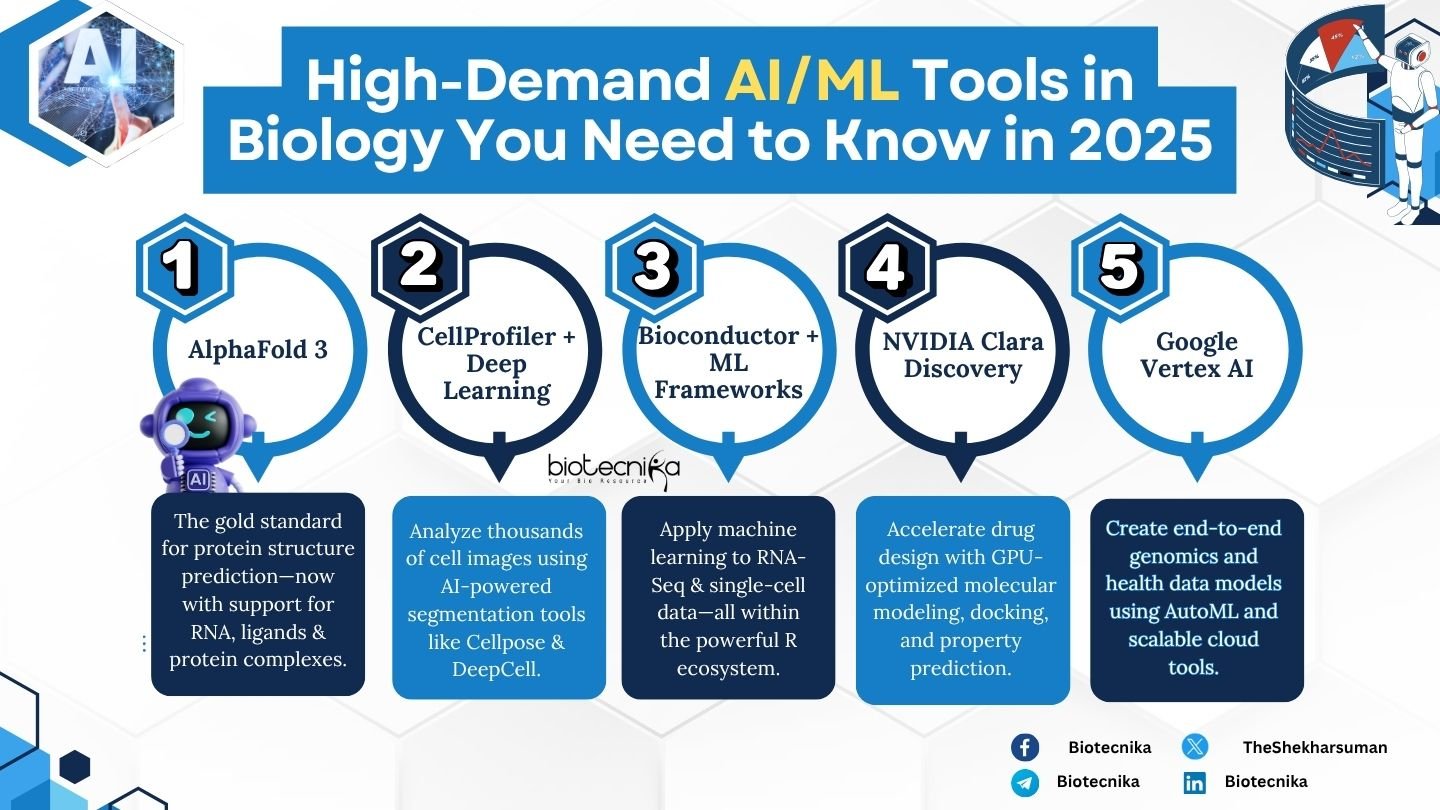
Best AI for Biology Students to Understand Molecular Modeling
Let’s compare the most powerful tools in 2026.
AI Tool Comparison Table
| Feature | AlphaFold AI | ChimeraX | ChatGPT |
|---|---|---|---|
| Protein Structure Prediction | Excellent | Strong | Moderate |
| 3D Visualization | High | Excellent | Low |
| Molecular Simulation | High | Very High | Low |
| Learning Support | Moderate | Moderate | Excellent |
| Best For | Protein folding research | Visualization | Concept explanation |
Recommended Tools
- AlphaFold
- UCSF ChimeraX
- ChatGPT
Each tool supports a different stage of molecular biology learning.
AI Tool Checklist for Molecular Modeling Students
Before choosing a tool, ensure it can:
- Visualize protein structures in 3D
- Simulate molecular interactions
- Predict protein folding patterns
- Explain biochemical processes clearly
- Support academic research and thesis work
If a tool cannot do these, it’s not suitable for molecular modeling education.
Step-by-Step: How to Use AI for Molecular Modeling in Biology
Let’s break this into a practical proccess you can follow.
Step 1: Choose a Molecule or Protein
Start with:
- Hemoglobin
- DNA structures
- Enzymes like amylase
Step 2: Input or Select Structure in AI Tool
Use tools like AlphaFold or ChimeraX to:
- Upload protein sequence
- Select molecular structure
- Generate 3D model
Step 3: Visualize Molecular Structure
AI will generate:
- 3D protein folding
- Binding sites
- Structural domains
This helps you see what textbooks cannot show.
Step 4: Analyze Molecular Interactions
Ask AI:
- “How does this protein bind to ligands?”
- “What is the function of this enzyme?”
Step 5: Study Protein Folding Mechanism
Protein Structure→Amino Acid Sequence Folding→Functional 3D Shape
This helps you understand biological structure formation.
Step 6: Simulate Molecular Behavior
Ask:
- “Show interaction between enzyme and substrate”
- “Simulate binding process step-by-step”
Step 7: Summarize for Academic Use
Ask AI:
- “Explain this molecular structure in simple terms”
- “Write summary for biology assignment”
This improves both learning and academic writing.
Advanced Strategies for Biology Students
Once you understand basics, level up with these techniques.
1. Protein Function Prediction
Ask:
“What is the function of this protein structure?”
2. Mutation Impact Analysis
Ask:
“How does mutation affect this protein folding?”
3. Drug Interaction Simulation
Ask:
“How does this drug bind to receptor proteins?”
4. Comparative Molecular Study
Ask:
“Compare structure of two proteins and their functions”
Pros and Cons of AI in Molecular Biology Learning
Advantages
- Makes invisible structures visible
- Improves understanding of protein folding
- Speeds up research analysis
- Enhances thesis writing
- Boosts student productivity
Limitations
- Requires basic biology knowledge
- May oversimplify complex interactions
- Simulation accuracy depends on input quality
- Needs verification from scientific sources
So yeah, AI is powerful—but biology still requires deep conceptual understanding.
Ethical Use and Academic Integrity
Let’s be honest—this is very important in biology education.
Using AI is acceptable if used responsibly.
Ethical use means:
- Understanding molecular concepts
- Not copying AI explanations blindly
- Verifying scientific accuracy
- Using AI as a learning aid, not a shortcut
If you don’t understand molecular biology, you’re not learning—you’re just observing simulations.
How AI Improves Biology Learning
AI tools help students:
- Visualize molecular interactions
- Understand biochemical processes
- Improve lab report writing
- Support research projects
This is especially useful in:
- Molecular biology
- Biochemistry
- Genetics
- Biotechnology
Smart Note-Taking for Biology Students
Modern AI tools allow you to:
- Save molecular diagrams
- Organize protein structures
- Track biochemical processes
This makes revision significantly easier.
Common Mistakes Students Make
Let me be honest—many biology students misuse AI tools.
Avoid these mistakes:
- Relying only on visual models
- Ignoring theoretical explanations
- Not verifying biological accuracy
- Skipping textbook study
- Overusing AI summaries
If you skip fundamentals, molecular biology becomes confusing again.
The Future of AI in Biology Education
By 2026, AI is becoming essential in biological sciences.
Students who learn how to:
- Use AI for molecular modeling
- Combine visualization with theory
- Understand biological systems deeply
…will always stay ahead.
Platforms like lrnai.xyz are helping students adapt through structured AI learning strategies designed for real scientific education.
And honestly, this is just the beginning of a revolution in biology learning.
Final Thoughts: See Biology, Don’t Just Memorize It
Molecular biology is not just theory—it’s a dynamic 3D world of interactions.
With the best AI for biology students to understand molecular modeling, you can:
- Visualize proteins clearly
- Understand biological mechanisms
- Improve research quality
- Learn faster and smarter
But remember:
AI is your assistant—not your biologist.
If you use it wisely, your not just studying biology—you’re understanding life at the molecular level.
Call to Action
Ready to master molecular biology with AI?
Start using AI tools for molecular modeling today and transform how you understand biological systems. Then explore more advanced AI learning guides on lrnai.xyz to boost your student productivity and master the future of learning.
And if you’ve discovered a smarter way to understand biology, share it—because the best scientists don’t just memorize life, they visualize it.
Leave a Reply