
Look, I get it, university life is stressful but nursing students carry one of the heaviest academic and emotional workloads in healthcare education.
You’re not just studying theory—you’re analyzing clinical case studies, interpreting patient symptoms, building care plans, and making decisions that mirror real hospital environments.
And the pressure? It’s intense.
Here’s the shift: in 2026, AI tools for nursing students for clinical case studies are transforming how future nurses learn diagnosis reasoning, patient care planning, and clinical decision-making.
In this guide, you’ll learn the best AI tools, how to use them step-by-step, and how to strengthen your clinical understanding while maintaining academic integrity.
If you’re serious about mastering AI in healthcare education, lrnai.xyz is becoming the ultimate resource for modern student learning.
Why Clinical Case Studies Are Difficult for Nursing Students
Before we explore tools, let’s understand the real struggle.
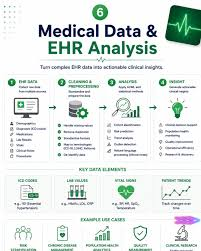
1. Complex Patient Data
Clinical cases include:
- Symptoms
- Vital signs
- Medical history
- Lab results
2. Critical Thinking Pressure
You must:
- Identify diagnoses
- Prioritize care
- Justify decisions
3. Time Constraints
Case studies must be completed quickly during coursework.
4. Risk of Misinterpretation
One wrong assumption can lead to incorrect clinical reasoning.
This is exactly where AI becomes a powerful learning assistant.
What AI Does for Nursing Clinical Case Studies
AI tools help nursing students by:
- Summarizing patient cases
- Identifying possible diagnoses
- Suggesting nursing care plans
- Explaining medical terminology
- Supporting clinical reasoning
Here is the real talk about using AI for your assignments: it’s not about replacing clinical judgment—it’s about improving understanding and decision-making speed.
Best AI Tools for Nursing Students for Clinical Case Studies
Let’s compare the most effective tools in 2026.
AI Tool Comparison Table
| Feature | ChatGPT | Isabel AI | ClinicalKey AI |
|---|---|---|---|
| Case Study Analysis | Excellent | Very Strong | Strong |
| Diagnosis Support | Strong | Excellent | Very Strong |
| Nursing Care Plans | Excellent | Moderate | High |
| Medical Explanation | Very High | High | High |
| Best For | Learning + explanation | Clinical diagnosis support | Medical research |
Recommended Tools
- ChatGPT
- Isabel Healthcare
- ClinicalKey
Each tool supports different stages of clinical learning.
AI Tool Checklist for Nursing Students
Before choosing a tool, ensure it can:
- Analyze patient symptoms
- Suggest possible diagnoses
- Explain medical terminology
- Support nursing care planning
- Help interpret lab results
If a tool cannot do these, it’s not reliable for clinical case studies.
Step-by-Step: How to Use AI for Clinical Case Studies
Let’s break this into a practical proccess you can follow.
Step 1: Input Patient Case Information
Example:
- Age: 65
- Symptoms: Chest pain, shortness of breath
- History: Hypertension
Step 2: Ask AI to Summarize the Case
Prompt example:
“Summarize this clinical case and highlight key symptoms and concerns.”
Step 3: Request Possible Diagnoses
Ask:
- “What are possible diagnoses based on these symptoms?”
- “What conditions should be considered?”
AI helps generate clinical hypotheses.
Step 4: Analyze Pathophysiology
Ask:
- “Explain the underlying cause of these symptoms”
- “How does this disease develop in the body?”
This strengthens medical understanding.
Step 5: Generate Nursing Care Plan
Ask AI:
- “Create a nursing care plan for this patient”
- “List interventions and monitoring steps”
This helps in practical clinical assignments.
Step 6: Prioritize Patient Care
Ask:
- “What is the priority nursing action?”
- “Which symptoms are most critical?”
This builds clinical decision-making skills.
Step 7: Verify with Medical Sources
Always cross-check:
- Textbooks
- Clinical guidelines
- Instructor notes
AI supports learning—but clinical accuracy is essential.
Advanced Strategies for Nursing Students
Once you master basics, level up with these strategies.
1. Differential Diagnosis Mode
Ask:
“List possible differential diagnoses for this case”
2. Emergency Scenario Simulation
Ask:
“What if the patient condition worsens suddenly?”
3. Care Plan Optimization
Ask:
“Improve this nursing care plan for better outcomes”
4. Medical Terminology Breakdown
Ask:
“Explain this medical term in simple language”
Pros and Cons of AI in Nursing Case Studies
Advantages
- Improves clinical reasoning
- Speeds up case study analysis
- Enhances understanding of diseases
- Supports care plan development
- Boosts student productivity
Limitations
- Risk of incorrect suggestions
- Requires verification from medical sources
- May oversimplify clinical complexity
- Over-reliance risk
So yeah, AI is powerful—but it must support, not replace, clinical judgment.
Ethical Use and Academic Integrity
Let’s be honest—this is critical in nursing education.
Using AI is acceptable when used correctly.
Ethical use means:
- Understanding clinical reasoning
- Not copying care plans blindly
- Verifying medical accuracy
- Applying knowledge in real practice
If you don’t understand the case, you’re not preparing for real patients—you’re just completing assignments.
How AI Improves Nursing Education
AI tools help students:
- Understand disease mechanisms
- Practice clinical decision-making
- Improve care planning skills
- Learn faster through case simulations
This is especially useful in:
- Medical-surgical nursing
- Pediatric nursing
- Emergency care
- Community health nursing
Smart Note-Taking for Nursing Students
Modern AI tools allow you to:
- Save case summaries
- Organize diagnoses
- Track care plans
This makes revision and exam preparation much easier.
Common Mistakes Students Make
Let me be honest—many nursing students misuse AI tools.
Avoid these mistakes:
- Copying care plans without understanding
- Ignoring patient context
- Not verifying diagnoses
- Over-relying on AI outputs
- Skipping clinical guidelines
If you skip understanding, your clinical readiness will suffer.
The Future of AI in Nursing Education
By 2026, AI is becoming essential in healthcare education.
Students who learn how to:
- Use AI for case study analysis
- Combine clinical knowledge with AI insights
- Maintain academic integrity
…will always stay ahead in healthcare training.
Platforms like lrnai.xyz are helping students adapt with structured AI learning strategies designed for real-world medical education.
And honestly, this transformation is just beginning.
Final Thoughts: Think Like a Nurse, Learn Like a Future Clinician
Nursing is not just about memorizing symptoms—it’s about making life-saving decisions.
With the best AI tools for nursing students for clinical case studies, you can:
- Analyze faster
- Understand deeper
- Build better care plans
- Improve clinical confidence
But remember:
AI is your assistant—not your clinician.
If you use it wisely, your not just completing case studies—you’re preparing for real patient care.
Call to Action
Ready to improve your clinical skills?
Start using AI tools for nursing case studies today and transform how you learn patient care. Then explore more advanced AI learning guides on lrnai.xyz to boost your student productivity and master the future of learning.
And if you’ve discovered a smarter way to analyze clinical cases, share it—because the best nurses don’t just follow procedures, they understand patients deeply.
Leave a Reply